
Getting Your Kid Into Golf: A Beginner's Guide to Starting Junior Golf
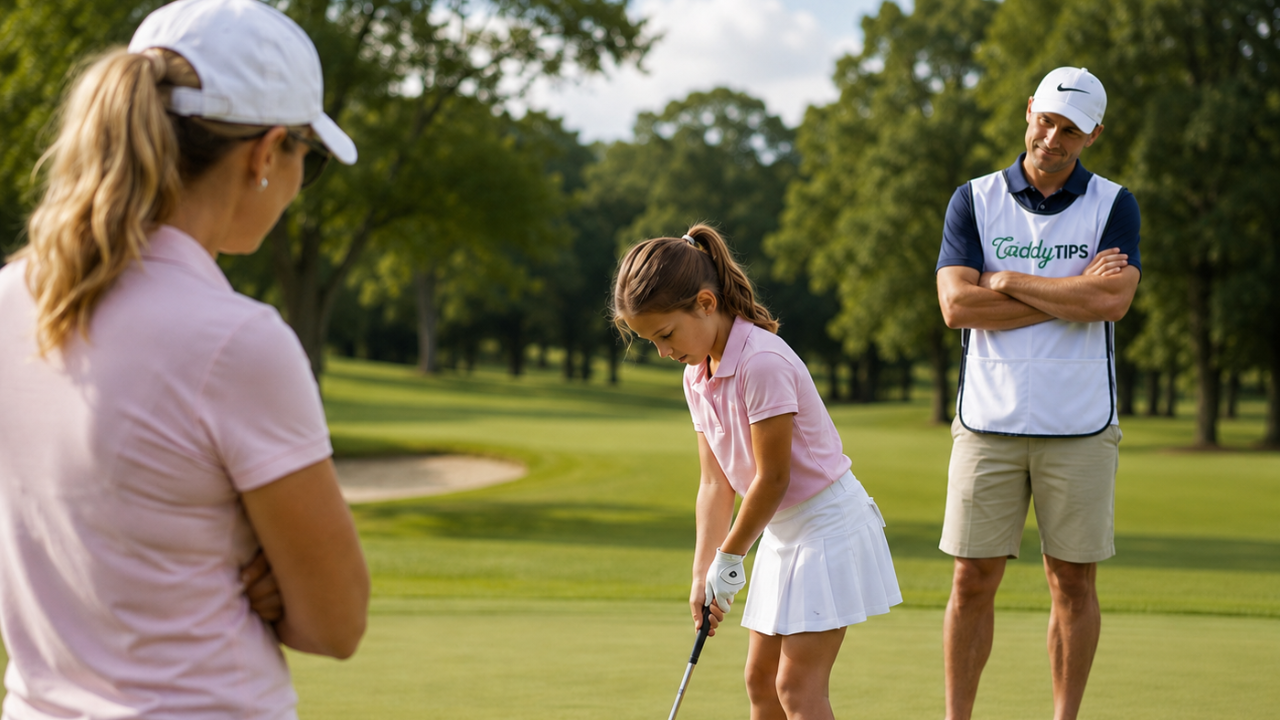
There may be nothing better in this game than watching a kid light up after a flushed shot. Golf gave most of us a lifetime of mornings we'll never forget, and handing that down to your kid is one of the best things you can do as a parent. But there's a right way and a wrong way to do it, and the difference usually comes down to one thing: whether your kid still wants to play golf ten years from now.
So before you cut down your old 7-iron and march them to the first tee, here's a parent's playbook for starting junior golf the right way — built from the advice of teaching pros who do this for a living.
Think marathon, not a sprint
This is the whole ballgame, so we'll lead with it. Your job in the early years isn't to build a scratch player. It's to build a kid who loves golf enough to keep showing up. A six-year-old who's the best in their group means very little if they've quit by thirteen. Golf is a twenty-year game, at minimum — play the long game with it.
That means the number-one rule is simple: **don't force it.** Drag a kid to the range or push them into a camp they're not ready for, and you're fighting uphill. Let curiosity lead. Plenty of kids catch the bug just by watching a parent bang balls in the backyard and asking for a turn. When that moment comes, you're ready.
When should a kid start?
There's no magic age. Kids can swing a club at two and pick the game up at sixty-two. What changes is *what* you do at each stage.
- **Ages 2–4:** Pure play. A plastic club, an oversized ball, and short bursts of fun — think fifteen or twenty minutes, max. Don't worry about grip or stance. You're just building the idea that swinging a club and making contact is a blast.
- **Ages 5–7:** This is the sweet spot for real fundamentals. Attention spans are long enough for light instruction, and kids can start learning grip, setup, etiquette, and basic course awareness — ideally in a group, where it's social and fun.
- **Ages 8 and up:** Skills, short game, and on-course play come together. This is when many kids are ready for structured programs and their first real rounds.
And here's a freebie for the little ones: if your kid can't yet run, jump, kick, and throw a ball, those general athletic skills are worth building too. A good junior coach folds movement and play into every session, not just swings on a mat.
## Make fun the entire point (early on)
The fastest way to grow a golfer is to make sure the first hundred experiences are genuinely fun. A few field-tested ideas from coaches who specialize in juniors:
- **Throw out the rules — and the scorecard.** No need to count strokes when they're starting out. Let them tee it up, hit a few, and play the best one. If an older kid wants to keep score, invent your own version — track good shots with a "+" instead of writing down numbers.
- **Start with mini golf.** It's cheap, it's a family outing, and it opens up the whole conversation about golf without committing anyone to four hours on a course.
- **Turn practice into games.** Putting contests, chip-in challenges, "give the grass a haircut," hitting water balloons so they explode on contact (great for teaching them to swing *through* the ball, and they'll laugh every time). Games keep the competitive spark alive without the pressure.
- **Let them drive the cart.** Within reason and closely supervised, of course — but few things peg a kid's fun meter like piloting the cart down the path. (A bungee cord helps strap their little bag in, too.)
- **Take them to watch golf.** Kids are tremendous visual learners. A practice round at a tour event — go early, get close on the range and putting green — or even golf on TV plants the seed better than any lecture.
## Get the right clubs — and not too many of them
This is where a lot of well-meaning parents go wrong, so it's worth getting right.
**Size by height, not age.** Two kids the same age can be six inches apart, and the club has to fit the body. Measure your child's height with their shoes on, on a flat floor, then match it to the manufacturer's sizing chart. U.S. Kids Golf, one of the most trusted names in the space, builds sets in height "levels" that step up every three inches so the whole set stays proportional as your kid grows. When you're between sizes, go slightly longer so they can choke down and grow into it — but don't buy *way* big hoping they'll catch up. A club that forces a kid to stand up tall or chop down at the ball teaches habits you'll spend years undoing.
**Fewer clubs, not more.** A beginner doesn't need a fourteen-piece bag — that's heavy, it's overwhelming, and it slows learning. A half set of four to seven well-fit clubs is better. Honestly, a putter and a 7-iron alone are a fantastic starting point: with those two, a kid can putt, chip, and hit balls, and both are forgiving enough to deliver the early success that keeps them hooked. U.S. Kids even makes an ultralight "Yard Club" for first-timers that makes getting the ball airborne easy.
**Whatever you do, don't cut down your old clubs.** It's tempting and it feels thrifty, but cut-down adult clubs are too heavy and too stiff for a kid to swing in rhythm. They'll start flipping their hands and falling backward just to get the ball up — the body doing whatever it takes to survive a club it can't control. Real junior clubs are lightweight, higher-lofted, and balanced for small swings.
The essentials to start: a high-loft driver or fairway wood, maybe a hybrid, a mid-iron (7 or 8), a wedge, a putter, and a light carry or push-cart bag. That's plenty.
## Leave the swing coaching to a pro
Here's a hard truth for the golf-loving parent: unless you're actually a coach, your "head down, weight back" tips are doing more harm than good. Most of us know just enough to be dangerous. The early years are precisely when you *don't* want to bake in bad habits.
Hand the swing instruction to someone who teaches kids for a living. Local junior clinics are usually inexpensive, run by experienced pros who know how to keep kids engaged, and — crucially — full of other kids. Group lessons are golden for beginners: kids have more fun, stay more engaged, and learn a ton just from seeing peers their own age swing it. Save private lessons for later, once your kid is genuinely motivated and wants more.
And when you're choosing a coach, look for someone with a real track record developing juniors, not just whoever drew the short straw at the pro shop. A great junior coach lets a five-year-old's grip be a little funky, keeps things game-based, and grows the athlete — not just the golfer.
Your role? Be the encouragement. Celebrate the small wins, never dwell on the bad shots, and remind them what they did well. Positivity produces more good shots.
## Plug into a junior program
Once your kid is keen, structured programs are some of the best value in the game. A few worth knowing:
- **First Tee** — Combines golf with character and life skills, reaching millions of kids a year. A welcoming, low-pressure on-ramp with locations all over the country.
- **PGA Jr. League** — Think Little League for golf. Kids wear numbered team jerseys and play a fun, two-person scramble format, so there's a teammate beside them and no pressure to carry a round alone. Divisions typically run from age 7 up through 17.
- **U.S. Kids Golf** — Beyond clubs, they run local tours and a development structure that meets kids at every level.
- **Operation 36** — A brilliant developmental model: kids start just 25 yards from the hole and only move back (to 50, 100, 150 yards, and eventually the full tee) once they shoot par for nine. Early success is built right into the design.
- **Drive, Chip & Putt** — A free, nationwide skills competition (run with the Masters, PGA, and USGA) that gives kids a fun goal to chase.
Many local courses also run their own summer camps and clinics — often the easiest first step. Ask your home course what they offer.
## The first real round
When it's time to graduate from the range to the course, set them up to succeed.
Pick a short, friendly track — an executive or par-3 course is ideal. Flatter greens, shorter holes, easy to walk, and far less likely to overwhelm a beginner than a full-length championship layout. Play from the forward or junior tees, and look for junior rates and off-peak tee times so nobody feels rushed by groups behind them.
Lean into the short game. Kids are often fearless and natural putters because they've got no scar tissue from past three-putts — they just see the ball and roll it at the target. A fun home drill: have them putt to a coin or a ball marker instead of a hole. When they get to a real cup, it'll look like a bucket.
And remember the cardinal rule of that first round: it's about them, not your scorecard. The golf gods love nothing more than handing you your best ball-striking day the very moment your kid decides to go chase a squirrel. Let it go. The grin is the win.
## Common mistakes to skip
- Buying clubs by age instead of height (or cutting down adult clubs).
- Handing a beginner a full, heavy bag with fifty balls in it.
- Coaching the swing yourself instead of finding a pro.
- Keeping score — and reacting to it — before they're ready.
- Pushing too hard, too fast, and chasing "potential" instead of fun.
- Starting them on a long, demanding course for their first round.
## The bottom line
Get the fit right, keep the bag light, hand the teaching to a pro, and protect the fun at all costs. Do that, and you're not raising a kid who shoots a number — you're raising a kid who *loves golf*, which is the only score that matters in the early years. Keep them aspiring to par or better, keep it joyful, and you'll have a playing partner for life.
Now go make a splash. ⛳
---
*From the team at CaddyTips® — strategy and stories to help every golfer play their best.*