
A Sleeping Giant Awakens: Andrew Green’s New Big Canyon Golf Course Design
Big Canyon Country Club's golf course in Newport Beach has been completely redone. Architect Andrew Green has rebuilt the course from the ground up, with new greens, new bunkers, new tees, and a new routing that shows off the canyon like never before. Any caddy who knew the old layout will have to throw out the old yardage book and start fresh.
A Club With Serious History
Big Canyon opened in 1971 on a Desmond Muirhead design, cut into a canyon by one of the biggest earthmoving projects of its era. Over the years it has hosted qualifying for eight U.S. Amateurs and three U.S. Women’s Mid-Amateurs, along with a long list of USGA qualifiers and regional championships. In 2014, it hosted a national championship of its own, the U.S. Senior Amateur.
But one of its most famous moment came at the 1996 Pac-10 Championship. A Stanford sophomore named Tiger Woods opened with an 11-under 61, shattering the course record by five strokes, then went on to win by 14. It was one of the early signs of what was coming for the rest of the golf world.
Why the Club Chose Andrew Green
The course had not seen a major renovation since 1998, and its bunkers, irrigation, drainage, and greens had all reached the end of their useful life. Rather than patch the old layout, the club set out to find the right architect for a complete rebuild. The search was fastidious, with close attention paid to every detail, and it ended with the hiring of Andrew Green in the fall of 2022.
Green arrived with an impressive résumé, including his work at Oak Hill’s East Course, Inverness, Scioto, Congressional’s Blue Course, and East Lake. He has described Big Canyon as “a sleeping giant in the world of golf,” and his vision was to wake it up: a course with more choices and more variety, one that asks better questions of good players while staying enjoyable for everyone, and one that leans into the canyon itself. Construction began in August 2025.
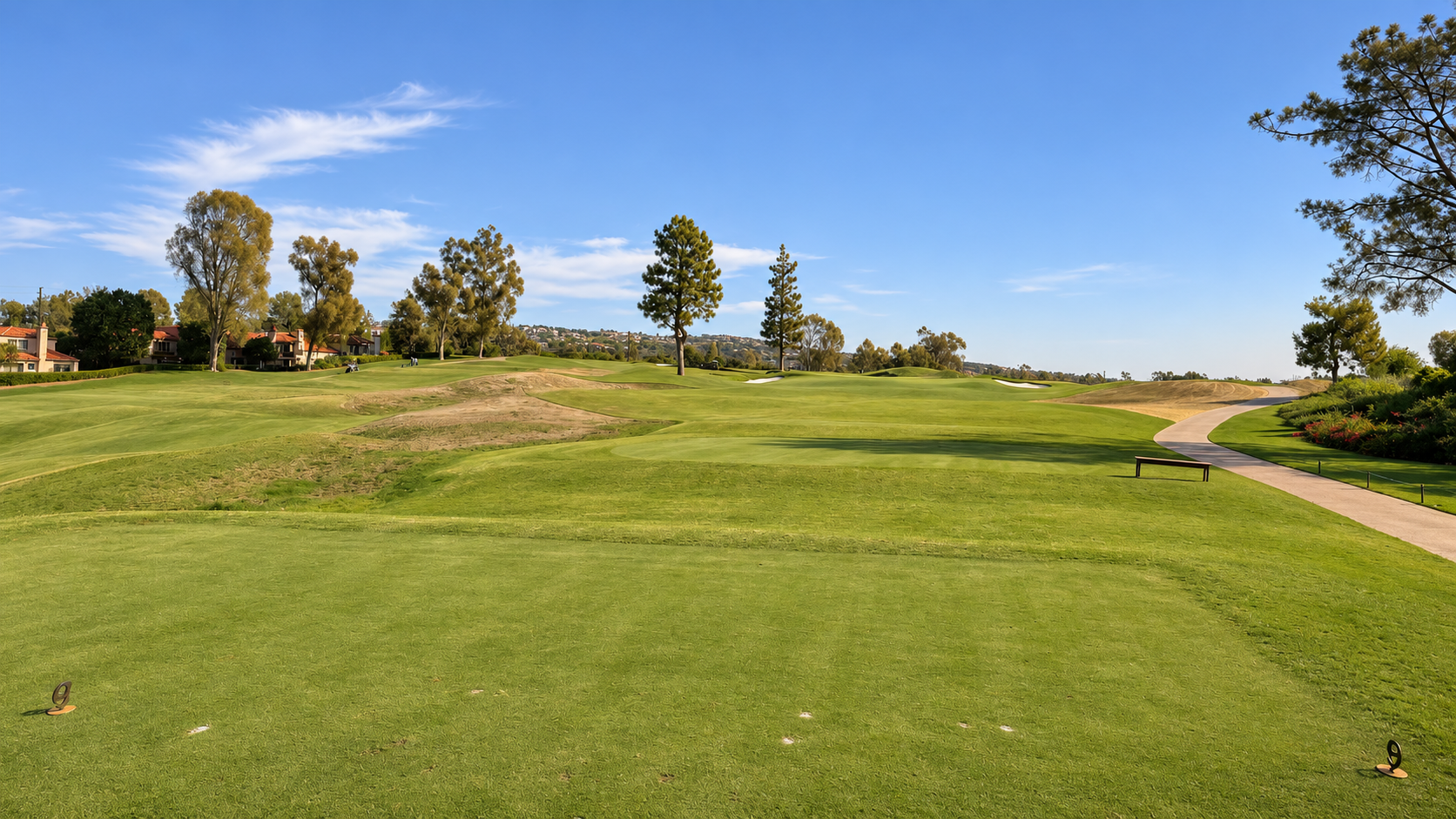
No. 7 — Where the New Routing Reveals Itself
One of the highlights of the redesigned course is the view from the seventh tee. The sixth is still a par 5 located and played in the same direction as the last design. From the back of its green, head left past the new comfort station that extends over the lake, then climb to the spot where the old 14th green once sat. When you reach the top, the course opens up in front of you, with fairways and greens sweeping across the rolling terrain.
With many trees removed, the landscape is wide and open with a links-style feel, and you can see several of the new holes at once. Any good caddy would tell you to take a long look from up there, because studying those green complexes now will pay off later in the round.
No. 9 — One of the New Favorites
The old 18th is now the ninth, and it might be the best hole on the course. It’s a demanding par 4 and the No. 1 handicap hole. The tee shot plays downhill, so expect plenty of rollout. The bunkers down the left are in play for most golfers, and the fairway pinches just beyond them, where the creek that once ran down the left now hugs the right side. Trying to squeeze a drive through that gap is like threading a needle.
For longer hitters, driver is a very risky play. Take a club that finishes short of the bunkers and leaves a full approach from the widest part of the fairway. Shorter hitters can usually hit driver and still stay short of the bunkers.
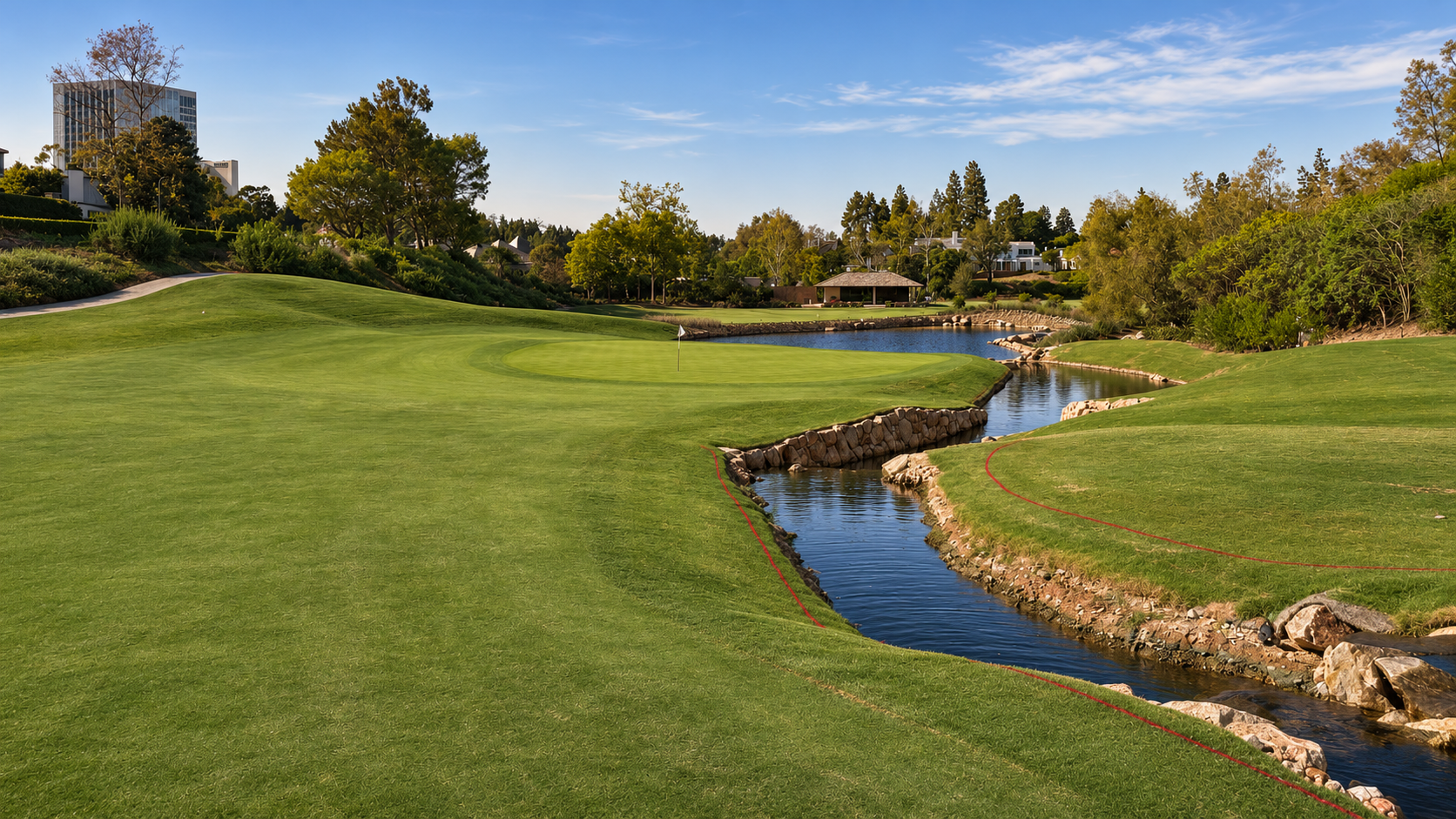
The reward is one of the most stunning second shots at Big Canyon. The water that used to sit in front of the green is now located behind it, along with a new comfort station beyond. The new landscaping and creek frame the shot beautifully.
No. 18 — A Finish Worthy of the Clubhouse
The new 18th is the old 9th, and members have wanted this change ever since the new clubhouse was built. It is a dramatic finishing hole that plays right toward a beautiful clubhouse. The routing was tested while the clubhouse was under construction, but inevitably, the course went back to its original order after the clubhouse construction was completed. Now the change is permanent.
The hole plays much like it always has, and the strategy is the same. The big difference is off the tee: with the fairway bunker and trees on the right side gone, missing the fairway to the right is no longer as penal.
What Changed, Hole by Hole
No. 1 (Par 4): The hole was opened up significantly with the tree removals on the right. This throws off 'St. Andrews' hole one and eighteen side-by-side' vibes; although, St Andrews has the first hole on the right - but same concept.
No. 2 (Par 5): Once a birdie chance, the 2nd is now longer with a demanding multi-tiered and shelfed green that rises from the water up the hill.
No. 3 (Par 3): The green is packed with steep slopes and sharp ridges, and a new forward tee means shorter hitters no longer have to carry the pond.
No. 4 (Par 4): A single steep and contoured bunker on the left replaces the old fairway bunkers and the doglegs sharply to the right starting at 75 yards. Completely new, narrow yet wide green with steep bunkers guarding front and back.
No. 5 (Par 4): A new tee box and a rise in the middle of the fairway, along with the new "boomerang bunker" that guards the left side of the fairway is the key to this hole. The player who challenges it gets a better look at a raised green, which is just as tricky as the old green.
No. 6 (Par 5): The trees on the left are gone, a big cross bunker shapes the second shot, and the green now accepts a running approach.
No. 7 (Par 3): The first new hole climbs uphill to a deep green where the hole location can change the club you need by three clubs.
No. 8 (Par 4): A new downhill par 4 to a raised green, and a front-right ridge pin is one of the most challenging on the course.
No. 9 (Par 4): The old 18th, with the creek now on the right and the green sitting in front of the pond.
No. 10 (Par 5): Now a short par 5, with cross bunkers that give you plenty of options for the layup. Steep narrow green. Below is a photo from the middle of the fairway in front of the cross bunker and where the hole begins to dogleg to the left and continue uphill, roughly 230 yards from the green.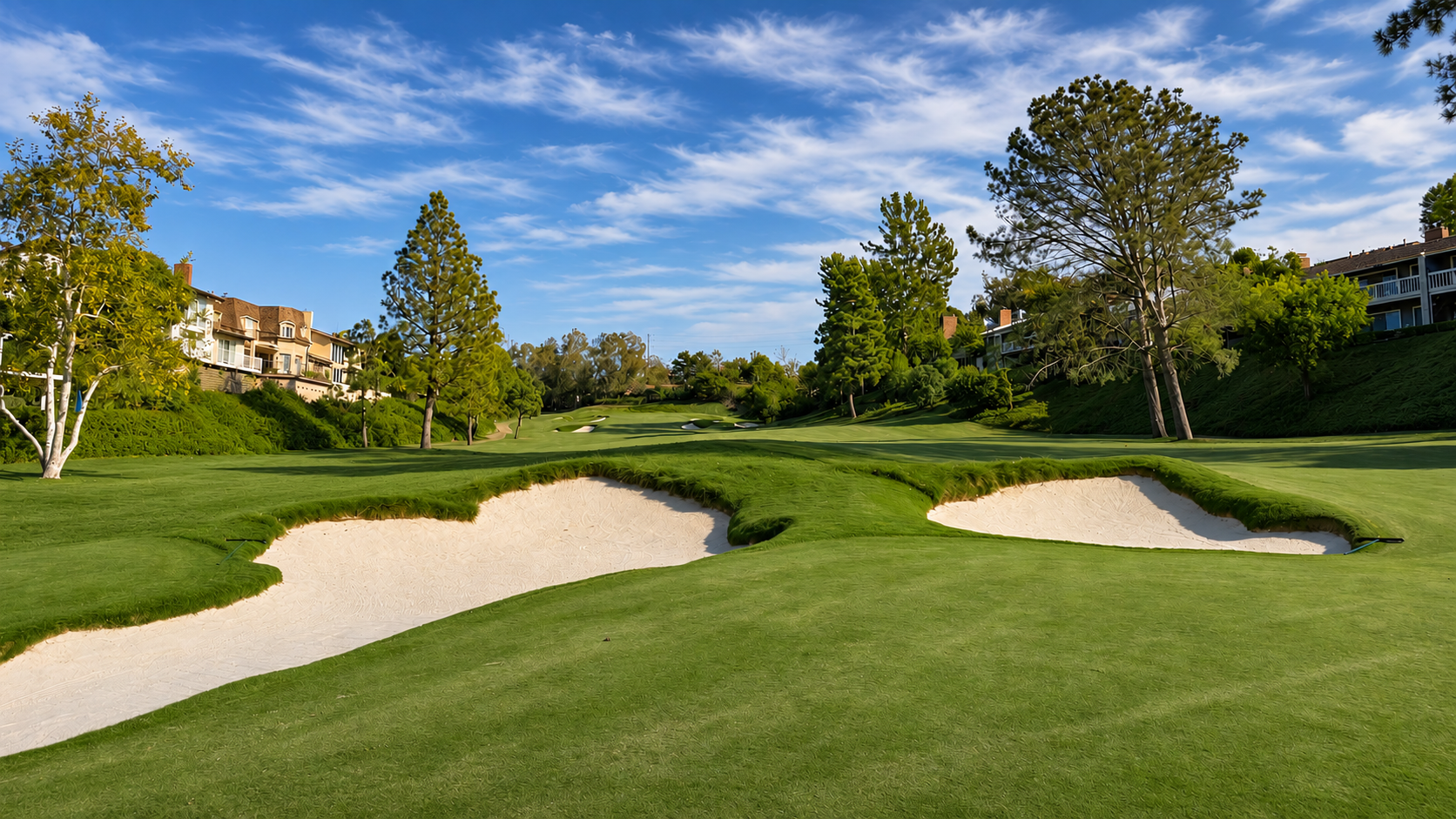
No. 11 (Par 4): Very slight dogleg left around a big, steep bunker that guards the left rough. Big expansive new green that fits nicely into the hillside, which influences most of the break.
No. 12 (Par 3): A long par 3 playing well downhill to a big green on the edge of the canyon, with room to run the ball on.
No. 13 (Par 5): A new uphill par 5 where a big cross bunker and angled bunkers near the green make you think on every shot. Slightly raised new green with some diabolical pin positions including back right.
No. 14 (Par 3): Plays downhill to a green set at an angle from left to right coming off the hillside. the green will generously accept a tee ball that runs up the left and it's a good option for those that have trouble carrying the ball.
No. 15 (Par 4): A short par 4 you can drive from every tee, so the go-for-it or lay-up decision is there for everyone. The lake and very strategically placed bunkers will catch those loose tee shots from swinging too hard.
No. 16 (Par 3): The shortest hole on the course, with a deep bunker front left, so the premium is on distance and spin control. Elevated green with a spine down the back-middle from left to right.
No. 17 (Par 4): Similar to the old #8, a rolling fairway with a bunker that sits in the middle of the fairway and dissects it. The hole has a real canyon character that leads to a curved green that is also split by a bunker in the middle.
No. 18 (Par 4): The old 9th, now the closing hole in front of the clubhouse, with a wide-open tee shot. Similar green to the original, diagonal and skinny and slopes towards the water.
The Greens May Steal the Show
The old Poa annua greens are gone, replaced by bentgrass built on a modern root zone, and they are absolutely phenomenal. They are fast, they roll true, and they are firm enough that full mid-iron shots barely leave a pitch mark. On a scale of one to ten, they are a ten.
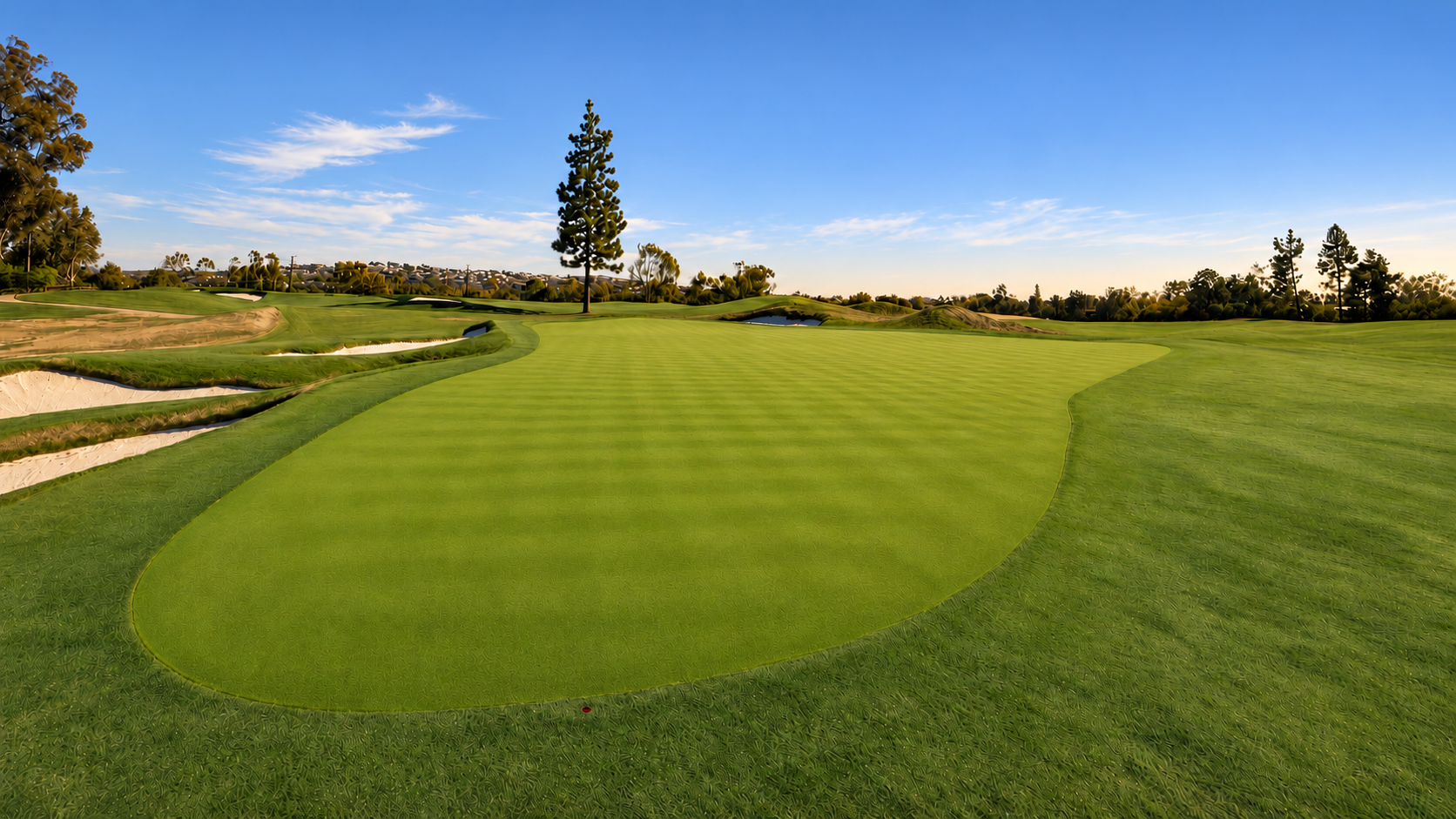
The greens are also a challenge. Green built steep slopes and pronounced ridges into many of the complexes, so the best target is often a particular section of the green. A Caddy would tell you to aim below the hole on the same tier, where you can leave yourself an uphill putt. With a full set of new tee boxes on every hole, you have more flexibility to play the course at a length that suits your game and gives you a better chance of hitting your spots on these challenging greens.
Insider Facts Worth Knowing
Big Canyon has always been an engineering story. When the course was first built, the superintendent of the day compared the dirt work to one of the biggest earthmoving jobs since the Panama Canal. This time, the goal was to make the ground look like it was never moved at all, with fairways that roll and twist like the canyon did before the original construction.
The new bentgrass wasn’t chosen on a hunch. Before construction started, the agronomy team converted the practice green near the 10th tee into two bentgrass varieties, Pure Distinction and Centennial, and let them compete side by side to see which one thrived best in Newport Beach conditions.
The back nine has a stretch every golfer will love: a par 3, a drivable par 4, then another par 3 at 14, 15 and 16. It is the same rhythm you’ll find at some of the most admired courses in the country, including the California Golf Club of San Francisco and both Streamsong Black and Streamsong Blue.
A few more details tell you how carefully this course was thought through:
- New Par - Par is now 71 and the course rating and slope has gone up.
- A shorter walk. Despite the new routing, the total walk from first tee to last green is actually about 800 feet shorter than the old course.
- Built to be flipped. The routing is flexible enough that the nines can be swapped, and a couple of crossovers reversed, if the club ever wants a new look.
- No more forced carries. The old pattern of bunkers guarding both front corners of most greens is gone, so shorter hitters can run the ball onto the putting surface.
- A tee for everyone. Every hole has five sets of tees, so players of every swing speed get a course that plays fair and interesting.
- Infrastructure for the long haul. The new irrigation uses fused HDPE pipe, which is expected to last roughly a century, compared with about 20 to 30 years for the old PVC system.
- Still growing in. The native grass areas can take two to three years to fully mature, so the course will only look better each season.
- A clean slate for the record book. Tiger Woods, set his famous 61 on a layout that no longer exists, so the new course record is up for grabs.
- A par 3 that plays like a par 4. The new 12th can stretch to roughly 270 yards from the back tee, playing downhill to a green on the edge of the canyon. A low tee shot with tops ping can be run up to the green down the left side of the slope via an extended fringe landing area.
- A green with range. The 7th green was designed with more than 45 yards of depth for hole locations, so the right club can change by two or three clubs from one day to the next.
The Verdict
Word at the club is that the new course has been received extremely well. Members are very pleased with Andrew Green’s work and with how the construction came together. The sleeping giant is awake, and it was well worth the wait.
CaddyTips Bonus: The Little Details
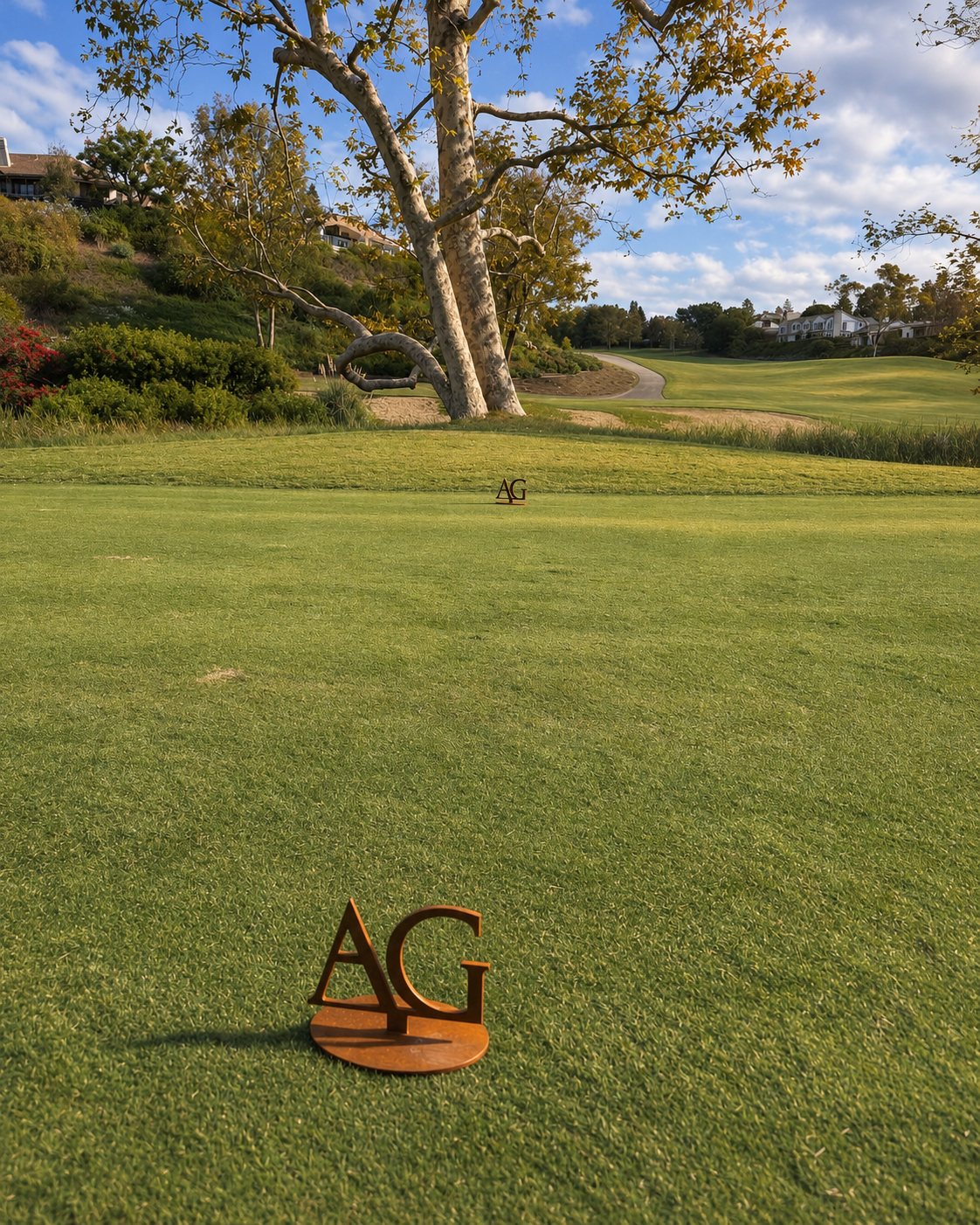
The new Big Canyon plays from five sets of tees, each with its own tee markers: Canyon, Falcon, Member, AG, and Big. The AG tees are named for Andrew Green himself. Keep an eye out for the AG markers, they are a nice nod to the architect.
Also, the club kept its classic logo through the renovation and reset period, but there is a new flag on every pin, a double pennant featuring the original logo. If you like it, the golf shop is selling merchandise with the new flag pennant logo in the pro shop, and yes, they take credit cards.