
Why Does Beau Hossler Take So Long Over the Ball — And Should You?
beau hossler over the ball pre-shot routine target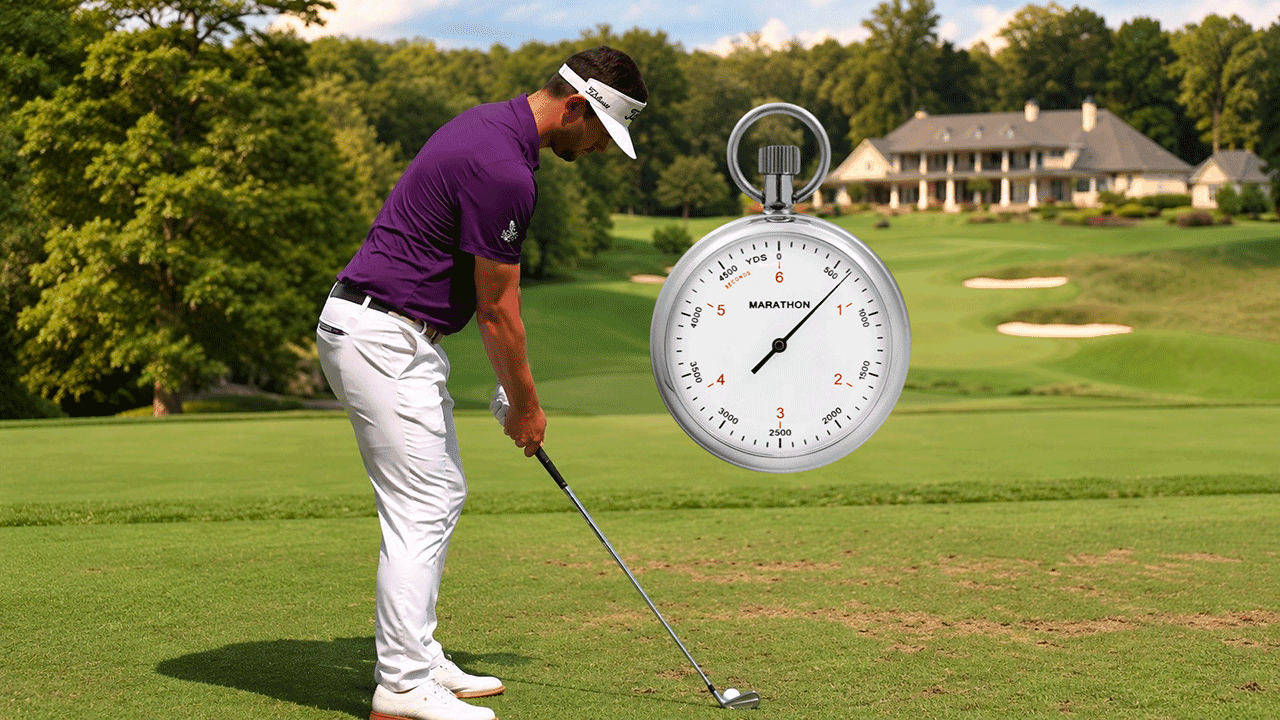
If you were watching the Wyndham Championship this weekend, you probably saw plenty of Southern California native Beau Hossler. Hossler held the 36-hole lead heading into the weekend and remained in contention Saturday—and one thing about his game caught our attention almost like clockwork: his unusually deliberate pre-shot routine.
Once Hossler gets over the golf ball, he can become almost completely still. He looks at the target, returns his eyes to the ball and then appears to pause for several seconds before finally pulling the trigger. It's distinctive. And once you notice it, it's hard not to watch for it on every shot.
Now, let's be clear: Beau Hossler is a PGA Tour professional. Whatever he's doing over the ball is part of a routine developed through thousands upon thousands of competitive shots. We couldn't find a credible interview in which Hossler specifically explains the reason for that prolonged pause, so we're not going to pretend we know what's running through his mind.
But watching him raises a fascinating question for the rest of us:
How long is too long to stand over a golf ball?
Because we see amateur golfers do something similar all the time—and for many of them, those extra seconds aren't helping.
They're thinking about the swing instead of the shot.
Keep my head down.
Don't come over the top.
Slow takeaway.
Keep the left arm straight.
Turn through it.
Suddenly, the golfer who walked onto the tee thinking about where the ball should go is standing over it trying to remember how to swing a golf club.
And that's where trouble can begin.
The Range Is for Mechanics. The Course Is for Playing Golf.
Legendary instructor Harvey Penick spent a lifetime trying to make golf simpler rather than more complicated.
Penick's teachings continually brought golfers back to fundamentals, feel, aim and playing the game rather than becoming consumed by mechanical positions. When discussing the importance of learning to aim properly, Penick put it beautifully:
“Once you learn this, your mind will tell you how to aim.”
It's a simple thought with a much bigger lesson behind it.
There is absolutely a time to think about golf-swing mechanics.
It's called the driving range.
That's where you work on your grip. Your takeaway. Your transition. Your shoulder turn. Your club path. Whatever you and your instructor are trying to improve.
But when you're standing on the 14th tee with water down the right side?
You're not practicing anymore.
You're playing golf.
Your attention should be out in front of you—not somewhere inside your backswing.
Pick your target.
See the shot.
Commit to it.
Then let your body hit the golf ball.
There Are Really Two Pre-Shot Clocks
This is where Hossler's routine becomes particularly interesting.
When we say a golfer is "taking too long," we're often combining two very different parts of the pre-shot process.
The first is decision time.
You're checking the yardage. Reading the wind. Evaluating the lie. Choosing a club. Looking at the trouble. Determining where you can miss. Selecting a target. Visualizing the shot.
Take your time here.
This is productive thinking.
The second clock begins once the decision has been made.
Call it execution time.
You know the yardage.
You have the club.
You've picked the shot.
You've chosen the target.
Now you're standing over the golf ball.
At this point, your job has changed.
You're no longer trying to figure out what you're going to do.
You're preparing to do it.
And that's a critical distinction for amateur golfers.
The Longer You Stand There, the More Your Brain Can Get Involved
Almost every golfer has experienced this.
You step into a shot feeling perfectly comfortable.
Then you wait.
Something suddenly doesn't feel right.
Am I standing too close?
You waggle again.
My alignment feels off.
Another look at the target.
Then something your instructor told you three months ago suddenly pops into your head.
Didn't he say I was taking the club too far inside?
Now you're thinking about your takeaway.
Then your hips.
Then your grip.
Then the bunker you absolutely don't want to hit.
By the time the club finally starts moving, you're attempting to consciously control an athletic motion you've performed thousands of times.
That's very different from taking extra time before addressing the golf ball to make a confident decision.
Preparation creates confidence. Indecision creates doubt.
Think Like a Tour Player and Caddie
Watch a Tour player and caddie prepare for an important approach shot.
There may be quite a conversation.
"We've got 168 to the flag."
"Playing about five uphill."
"Wind is slightly off the right."
"Front bunker is 154."
"Long is fine."
"I like the 7."
They may discuss yardage, wind, lie, elevation, club selection, trajectory, where the ball absolutely cannot go and where the ideal miss is.
Then something important happens.
The conversation ends.
The player takes the club.
The caddie steps away.
And the golfer walks into the shot.
Why?
Because the strategic portion of the shot is finished.
The decision has already been made.
That's one of the simplest—and most valuable—things recreational golfers can borrow from professional golf.
Your caddie shouldn't still be whispering swing thoughts into your ear while you're standing over the ball.
Neither should the voice inside your head.
The Caddie's Job Ends Before the Swing
Think about what a great caddie actually does.
A great caddie doesn't hit the shot for you.
He helps you remove uncertainty before you hit it.
He gives you the information.
He helps establish the target.
He reminds you where the trouble is.
He tells you where you can miss.
He helps you choose the club.
And perhaps most importantly, once the decision has been made, a great caddie helps you commit to it.
Then he gets out of the way.
That's exactly how your own pre-shot routine should work.
Do all of your thinking behind the golf ball.
By the time you step into the shot, the debate should be over.
Try the Five-Step Caddy Routine
The next time you play, try simplifying your pre-shot routine into five steps.
1. ASSESS
Understand the shot.
What's the yardage? What's the lie? Where's the wind? Where's the trouble? What's the smartest place to leave the golf ball?
2. TARGET
Pick a specific target.
Not "somewhere down the fairway."
Pick the right edge of that bunker. The left side of that tree. A particular section of the green.
Give your brain something specific to react to.
3. VISUALIZE
See the shot before you hit it.
Picture the starting line. The trajectory. The shape. Imagine the ball finishing where you want it to finish.
4. COMMIT
This may be the most important step.
Make the decision final.
You chose the club.
You chose the target.
You chose the shot.
The debate is over.
5. GO
Walk in.
Set the club.
Look at the target.
Look at the ball.
Swing.
Notice something that's intentionally missing after Step 4:
Reconsider.
If something genuinely changes—a gust of wind suddenly comes up, for example—step away and restart your routine.
Otherwise, trust the decision you've already made.
Course Knowledge Makes This Much Easier
There's another reason amateur golfers sometimes take forever before hitting a shot.
They don't know what they're supposed to do.
Think about playing a great golf course for the first time.
You arrive at a tee and see a bunker cutting into the fairway.
Can you carry it?
Is there room behind it?
Does the fairway open up on the other side?
Which side gives you the best angle into the green?
Is there trouble you can't see?
Where's the smart miss?
Now you're trying to solve an unfamiliar golf hole while simultaneously trying to hit a golf shot.
That's a lot to ask your brain to do.
And it's exactly why a good local caddie can be so valuable.
A caddie who knows the course might walk onto that same tee and say:
"Aim at the left edge of that bunker. There's more room right than it looks. Anything short-left is fine. Driver is the club."
Done.
Four sentences just eliminated most of the uncertainty.
Now you can concentrate on hitting the shot.
That's the Philosophy Behind CaddyTips®
It's also one of the reasons we created CaddyTips®.
We want you to have as much of that caddie conversation as possible before you ever stand over the golf ball.
Where's the ideal tee-shot target?
What's the best angle into the green?
Where's the trouble you can't see?
What's the smart miss?
Is this a hole to attack or one where patience is rewarded?
What does the green tend to do?
And importantly, how should that strategy change for a low-, mid- or high-handicap golfer?
When you already know those answers, something interesting happens.
Golf gets simpler.
You arrive at the tee with a plan instead of a question.
You spend less time trying to figure out the golf course and more time playing it.
That's what a great caddie does.
And that's what we're trying to put in your hands with CaddyTips.
So, Should You Copy Beau Hossler?
Probably not.
But you shouldn't necessarily try to rush yourself, either.
Hossler is an elite professional golfer with a routine built around his game, his personality and his process. If standing motionless over the ball for several seconds helps him lock onto the shot and perform at the highest level, that's his routine.
Your routine needs to work for you.
The lesson isn't that faster is always better.
The lesson is to understand when you're doing your thinking.
Take a reasonable amount of time behind the golf ball.
Get the information you need.
Understand the shot.
Choose your club.
Pick your target.
Visualize what you want to do.
Make your decision.
Then step in.
And play golf.
Because when you're finally standing over the ball, you shouldn't be thinking about your takeaway, your elbow, your hips or the golf lesson you had last Tuesday.
You should be thinking about one thing:
Your target.
The best pre-shot routine isn't necessarily the fastest one—or the slowest one.
It's the one that ends with a decision already made.
Categories
18 handicap 2008 u.s. open 2026 presdients cup alan mcarthur alister mackenzie amateur golf arizona caddy tips arizona desert golf arizona golf arizona golf courses arizona golf guide arizona golf travel arizona golf trip augusta national austin golf austin texas aw tillinghaust bad weather golf gear bandon dunes bandon dunes caddie bandon dunes packing list bandon golf trip bandon trails bearded caddy beau hossler beginner golf tips for kids ben crenshaw ben doyle benefits of a golf caddie best athlete golfer best golf clubs for kids best golf courses in arizona bethpage bethpage black bethpage black caddie bethpage black caddy bethpage black golf trip bethpage red betting on golf billy bell brian saltus british open broomstick putter bryson dechambeau bucket list golf trips cabot cape breton cabot citrus farms cabot cliffs cabot links caddie caddie experience caddy caddy collective caddy compensation caddy corner caddy fees caddy tipping guide caddy training caddytips california golf carmel carmel california golf central florida golf chris kirk clock system wedges club fitting coastal golf coastal golf course survival guide coastal golf travel coore and crenshaw correct tee boxes course management cypress point deane beman del monte desert golf desert golf strategy desert golf tips dillon garcia donald ross double bag caddy downhill lies drama edgewood tahoe fairway strategy fairway wood vs hybrid gapping tags: gapping fedexcup playoffs first tee florida caddies florida golf florida golf tips flyer lies forecaddie getting started in golf gil hanse golf accuracy golf advice golf aim small miss small golf alignment tips golf architecture golf architecture books golf betting golf betting strategy golf betting tips golf blog golf caddie golf caddie advice golf caddie services golf caddie tips golf caddies golf caddy golf caddy stories golf caddy tips golf confidence golf course architect golf course architects golf course design golf course guide golf course knowledge golf course management golf course preparation golf course strategy golf decision making golf destination travel golf destinations golf etiquette golf experience golf focus techniques golf for kids golf fundamentals golf history golf in austin golf instruction golf lessons golf management tips golf matchup betting golf mental game golf packing guide golf performance golf planning golf practice tips golf pre shot routine golf psychology golf putting tips golf rain gear golf rain gloves golf scoring tips golf setup routine golf shot pattern golf shot planning golf slang golf stories golf strategy golf swing visualization golf target focus golf target line golf target selection golf tee box golf tee box tips golf tee shot strategy golf terminology golf tips golf tips for parents golf tips from caddies golf travel golf travel arizona golf travel checklist golf travel guide golf travel tips golf trip essentials golf trip packing list golf trip planner golf trip planning golf trip tips golf vacation golf vacation arizona golf vacation checklist golf vacation tips golf visualization techniques golf wagering golf weather preparation golfing machine golfweek green reading harvey penick hawaii golf hawaii golf courses hawaii golf tips high desert golf hire a golf caddie hit more fairways hole names homer kelley hot make hot make putting how far do i hit my wedges how to gamble on golf how to get your kid into golf how to use a broomstick putter illinois improve your golf score improve your putting inspecting the lie intermediate target golf island golf jack nicklaus jackson koivun joseph burbeck jumping cholla cactus junior caddy junior golf junior golf club sizing junior golf clubs junior golf equipment junior golf for beginners junior golf lessons junior golf programs kalshi kids golf korn ferry tour caddy la jolla golf las vegas lies links golf links golf packing list links golf strategy little red book local caddie tips local caddy tips local golf caddie local golf caddy local golf knowledge long island golf long island golf courses long putter los angeles golf courses lost golf balls lower golf scores lower scores lucas herbert caddy march madness golf trip mardy fish golf medinah country club moneterey peninsula golf moneymillslocks monterey peninsula monterey peninsula caddie monterey peninsula golf new york golf new york golf courses nick faldo nick pugh oahu golf oceanfront golf oregon coast golf oregon golf oregon golf courses over the ball pace of play pacific dunes pacific northwest golf par 3 pebbel beach score card pebble beach pebble beach caddie pebble beach caddy pebble beach golf pebble beach golf course pebble beach golf course tips pebble beach golf links pebble beach golf links tips pebble beach golf trip pebble beach tips pebble becah course tips pete dye pga championship pga jr. league pga tour pga tour caddies pga tour caddy tips phil mickelson alignment tips picking a target off the tee pinehurst caddie pinehurst golf trip pinehurst no 2 playing in the wind playing the right tees plumb bob polymarket pre-shot routine presidents cup pro athletes playing golf professional caddy advice professional golf caddie proper tee box pull the trigger putting stroke putting yips quail lodge rancho park golf course ray red callahan reading greens red callahan reno tahoe golf robert louis stevenson robert louis stevenson school rory mcilroy royal birkdale royal birkdale redesign ryan fox saguaro cactus san diego golf scoring scottsdale golf scottsdale golf courses secrets shadow creek shadow creek golf club short game sidehill lies sonoran desert sonoran desert golf sony open sony open pro-am southern california golf spanish bay spanish bay golf course redesign spyglass hill spyglass hill golf course steph curry golf steve elkington steve wynn stevie shapiro streamsong black streamsong blue streamsong golf resort streamsong red tahoe golf target teaching kids golf tee it forward tee markers the golfing machine the open the open championship tom doak tom fazio tony romo golf torrey pines torrey pines south tpc tpc sawgrass trade winds troon north troon north monument course tucson golf tucson golf courses u.s. open uphill lies us kids golf wager on golf wagering on golf waialae waialae country club walking caddy walking golf waterproof golf shoes wedge distance chart wedge gapping wedge loft gaps wedges what to pack for a golf trip wind wind golf tips windy conditions youth golf