
A Caddy’s Guide to Betting on Golf… and Winning
Caddies are world-famous gamblers — not just on the games on TV, but on the very players they're carrying for. Spend a week inside the ropes and you learn fast that loopers are some of the sharpest bettors in any sport. They know the players, they know the courses, and they know the difference between a good golfer and a good *bet*. So we picked the brains of the caddies we know and put together a real guide to betting on golf — and actually coming out ahead.
Here's the part nobody selling you "locks" will tell you up front: golf is the highest-variance sport you can bet. A tournament has 150-plus players, the best player on earth wins maybe one start in four or five, and the eventual champion is often sitting at 20-to-1 or longer on Thursday morning. Bet a winner every week and you'll lose most weeks *by design*. Winning at golf isn't about being right often. It's about being right at the right price. Caddies get that in their bones — and the tips below are how they do it.
---
# 1. Course fit beats last week's finish
Every caddie believes in horses for courses, and the numbers back them up. Some players simply own certain venues: a bomber on a wide-open, driver-heavy track; a precise iron player on a course that demands position; a guy who's grown up on bermuda greens versus one raised on poa. Recent form gets all the headlines, but a player's *fit* for this week's setup — shot shape, length off the tee, comfort on the greens — is the read that actually moves your edge. Look at course history and the specific demands of the layout before you look at who finished top-10 last Sunday.
Some good examples of this: Freddie Couples at Augusta, Tiger Woods at Bay Hill, Phil Mickelson at TPC Scottsdale, Jordan Spieth at Colonial, Brooks Koepka at Bethpage Black.
# 2. Bet the matchups, not the trophy
Outright "to win" tickets are lottery tickets. The smart money lives in head-to-head matchups and 3-balls — pick which of two (or three) players posts the better score. These are close to coin flips, which means a small edge in your read compounds fast, with a fraction of the variance of an outright. This is exactly where seasoned bettors grind out long-term profit. If you only take one idea from this guide, take this one.
# 3. Play the wave
This is pure caddie knowledge. In a two-day tee-time draw, one wave can catch calm morning conditions while the other gets shoved out into afternoon wind or a passing storm. On a links or a coastal track, that draw can be worth multiple strokes before a single putt drops. Caddies live and die by the wind — check the forecast against the tee sheet, and don't be afraid to back a player simply because he drew the friendly side.
# 4. Trust the ball-striker, fade the hot putter
Putting is the noisiest stat in golf. A player who's "winning on his putter" is usually riding a streak that regresses hard. Ball-striking, on the other hand, is sticky — it shows up week after week. So lean toward elite ball-strikers whose putter has been cold (positive regression coming) and be skeptical of the guy whose whole case is a red-hot week on the greens. It's the closest thing to a repeatable edge in this game.
# 5. Lower your variance with top finishes
You don't have to pick the winner to cash. Each-way bets and top-10 / top-20 markets pay out when your longshot simply contends — which a course-fit pick does far more often than it actually wins. For longer prices especially, a top finish is the disciplined way to back a read without needing everything to break perfectly.
---
Where the real edge is: prediction markets
Here's the shift that's changed golf betting over the last couple of years. On a traditional sportsbook you place a bet, you hold a ticket, and you wait four days. Win or lose, there's no exit button — you're a spectator with a receipt. On a **prediction market**, your position has a live price that moves in real time as the tournament plays out. You can take profit early, cut a loss, or hedge a position when your guy gets into contention. That's a genuine strategic edge a fixed-ticket sportsbook can't match.
The two names worth knowing:
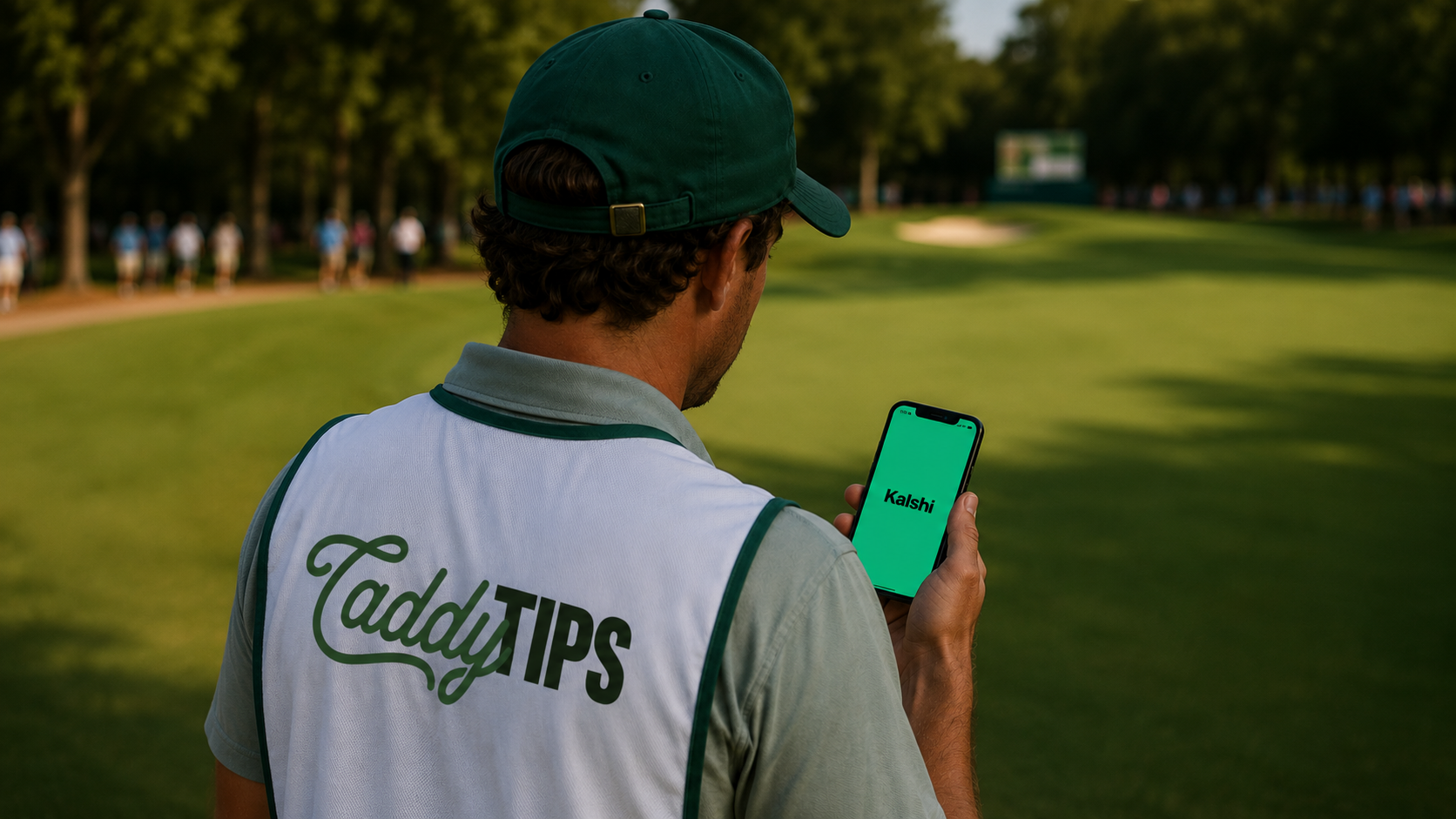
**Kalshi** — our pick for golf. It's federally regulated by the CFTC, available in nearly every state (which matters if you live somewhere sportsbooks aren't legal), and — crucially for us — it runs consistent golf markets every week, not just for the majors. Tight spreads, transparent fees, and that all-important live exit. If you're going to open one account, open this one.
**Polymarket** — the other major prediction market. Its golf coverage is less consistent (reliably the majors and marquee events, not every weekly tour stop), and it's been rolling back out to U.S. customers via a waitlist following its late-2025 regulatory approval, so check whether it's available in your state before you plan around it.
New to Kalshi? Click this link and get a free $25 trade: https://kalshi.com/sign-up/?referral=651a77bf-5136-4a98-ac85-a6adee3a7678&m=true&utm_source=mobile_app&utm_medium=copy&utm_campaign=referral&utm_content=referral_qr_sheet
---
How to spot a real sharp (and dodge the touts)
You asked about following sharp golf bettors — accounts and communities like MoneyMillsLocks (a paid golf-picks Telegram run by a capper who goes by "MoneyMills," running around $99/week or $250/month). Some of these communities are run by people who genuinely know golf. But the category is crowded with hype, and the math is brutal: most people who buy picks lose money over time. So before you pay anyone a dollar, evaluate them like a caddie reads a green — slowly, and with suspicion.
Signs of a real sharp
- A **verified, long-term record** — ideally a third-party-tracked ROI, not a phone full of winning-bet screenshots.
- They talk in **units and bankroll**, not "hammers" and "locks of the day."
- They mention **closing line value** — did they beat the number, or just get lucky on the result?
- They **post their losers too**. Everybody has them. Anyone who only shows wins is editing the tape.
Red flags of a tout
- "Guaranteed" plays, "locks," and pressure to upgrade to a pricier tier.
- Only winners on the timeline, losers quietly deleted.
- Selling certainty in a game that is, by nature, gloriously uncertain.
If a service can't show you a transparent, independently verified return over a full season, treat the subscription fee as the cost of entertainment — not an investment.
---
The caddie's bankroll rules
None of the above matters without discipline. The pros who survive treat it like a craft:
- Set a bankroll you can lose without it touching your life, and never reload on tilt.
- Flat-stake. One unit equals 1–2% of your bankroll. Bet the same size whether you "feel it" or not.
- Shop your lines. The same matchup is priced differently across books and markets — bet the number, not the name. (Tools like Data Golf are how the sharps find mispriced matchups.)
- Bet for value and for fun. If it stops being fun, walk.
Aim higher than breaking even — bet smart, bet patient, and let the right prices come to you. That's how a caddie does it.