
Can Gil Hanse Turn Spanish Bay into Pebble Beach's Third Crown Jewel?
For decades, golfers have flocked to California's Monterey Peninsula to play three legendary names.
The Links at Spanish Bay.
Yet if you asked golfers to rank them, the answer was almost always the same.
Pebble.
Spyglass.
...then Spanish Bay.
Despite its breathtaking oceanfront setting and unforgettable closing stretch, Spanish Bay has long carried the reputation of being the "other" course at Pebble Beach Resorts.
Now that's about to change.
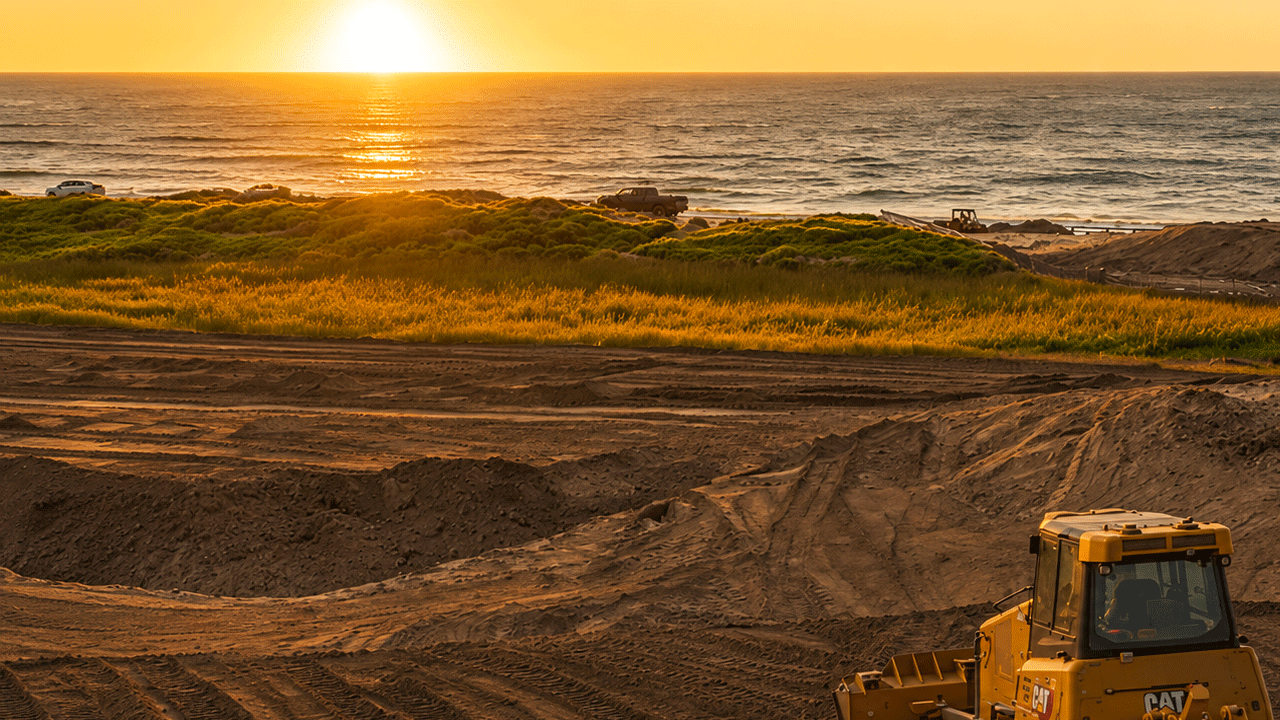
Beginning in 2026, acclaimed golf course architects Gil Hanse and Jim Wagner are undertaking a complete redesign of The Links at Spanish Bay with one ambitious goal: transforming the course into a true peer of Pebble Beach Golf Links and Spyglass Hill.
A Great Golf Course That Never Quite Reached Its Potential
When Spanish Bay opened in 1987, it was revolutionary.
Designed by Robert Trent Jones Jr., with design input from Tom Watson and former USGA President Sandy Tatum, it was one of America's earliest attempts to recreate the experience of Scottish links golf.
The opening and closing holes along the Pacific Ocean remain among the most memorable in California.
The evening bagpiper has become one of golf's most iconic traditions.
The Inn at Spanish Bay is one of the finest golf resorts in America.
Yet many golfers walked away feeling...
...something was missing.
The Biggest Criticism
Ironically, the criticism wasn't about the spectacular ocean holes.
Those have always been excellent.
Instead, golfers often pointed to the inland portion of the course.
Many felt several holes lacked the strategic interest, visual drama and memorable character found at neighboring Pebble Beach Golf Links or Spyglass Hill. Others felt the course relied too heavily on forced carries, narrow landing areas and rough immediately surrounding greens, making recovery shots less creative than on the world's best links-inspired courses.
Gil Hanse's team didn't ignore those comments.
They embraced them.
What Will Change?
This isn't simply a facelift.
It's a complete architectural rethink.
Among the biggest changes:
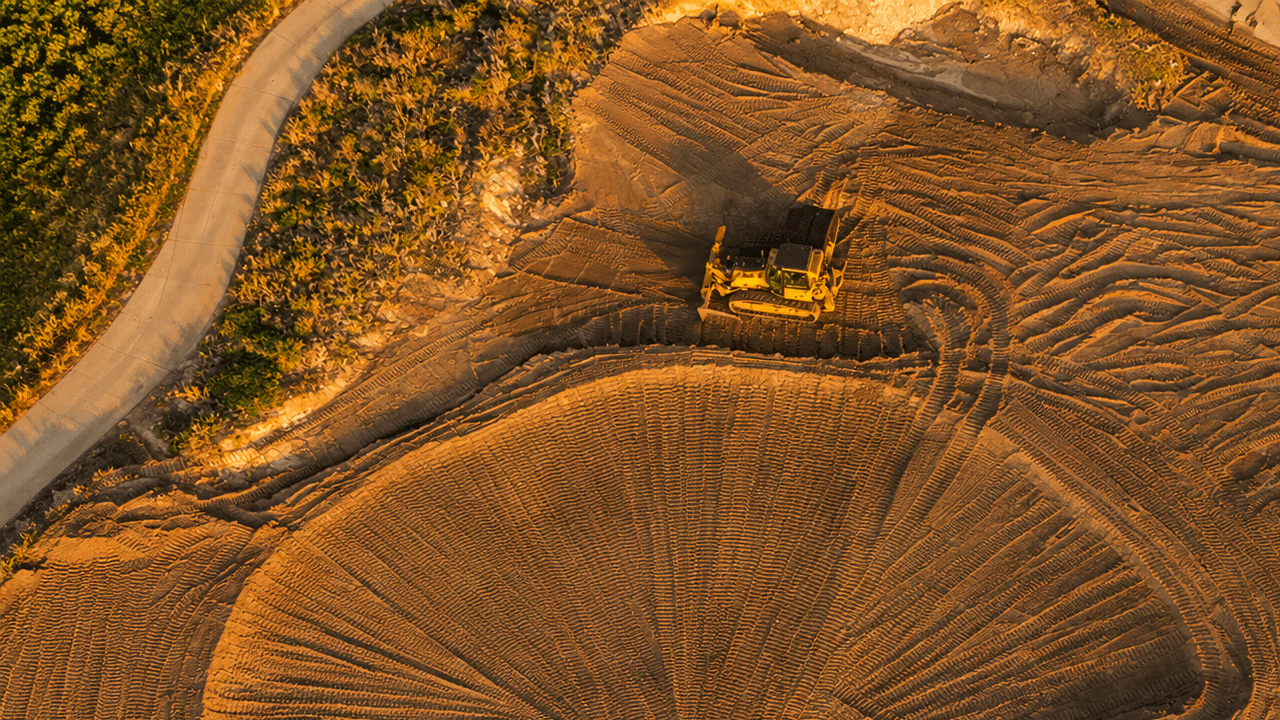
- Fairways will be widened by roughly 30%, creating multiple angles of attack and rewarding strategic decision-making rather than simply penalizing misses.
- Greens will expand by approximately 40%, restoring hole locations and allowing far more interesting approach shots.
- Greenside rough will largely disappear, replaced with tightly mown collection areas that encourage imaginative recovery shots—one of Hanse's design signatures.
- Fairway bunkers will be repositioned to challenge modern driving distances instead of where golfers hit the ball in 1987.
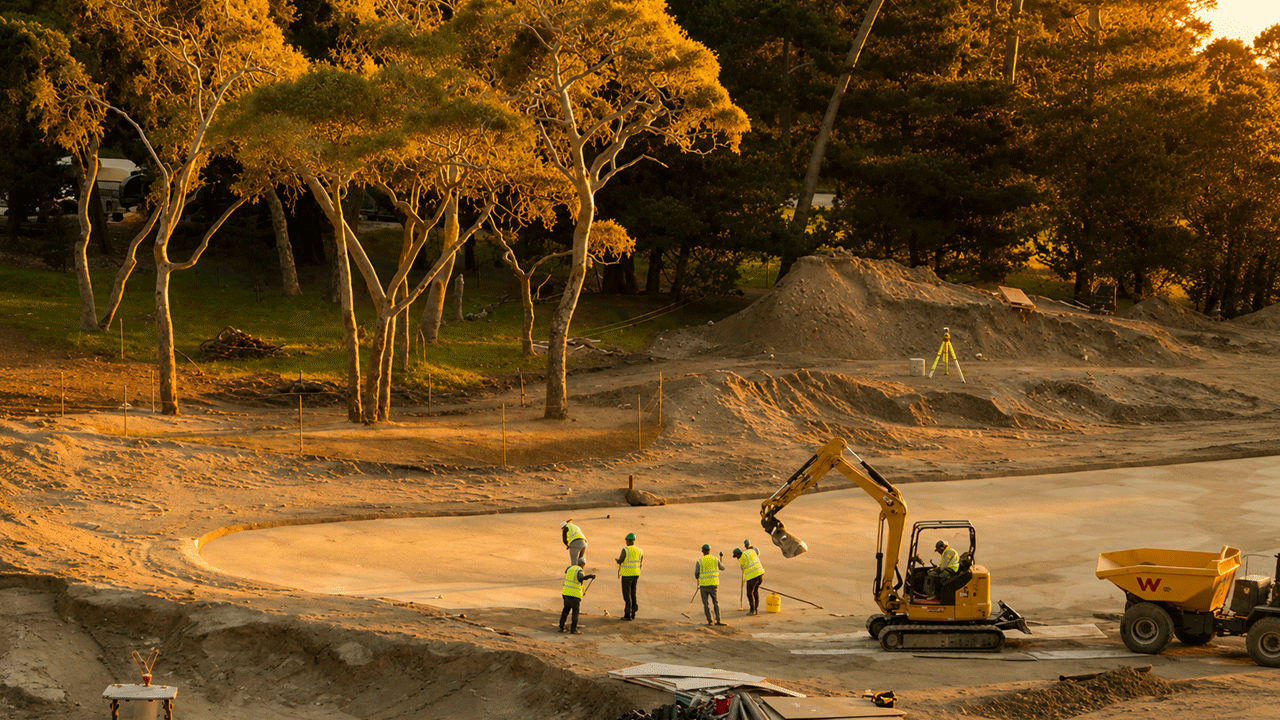
- Every tee complex will be rebuilt, improving sightlines while making the course more playable for everyday golfers and more demanding for elite players. The forward tees will play roughly 500 yards shorter, while the championship course becomes approximately 375 yards longer.
The Hole Everyone Will Be Talking About
Perhaps the most exciting addition is an entirely new par-3 14th hole.
Creating that hole requires relocating multiple greens, including the current 14th and 18th green complexes.
The routing will remain familiar, but golfers should expect a dramatically different experience once they reach the back nine.
Why Gil Hanse?
If Pebble Beach Company wanted the world's best golf architect, many would argue they found him.
Gil Hanse has become one of the most respected names in golf architecture through projects including Los Angeles Country Club (North), the Olympic Golf Course in Rio, Pinehurst No. 4, Castle Stuart, Streamsong Black and dozens of acclaimed restorations across the globe.
His philosophy is simple:
Create width.
Create options.
Reward strategy.
Allow golfers to recover creatively.
Those principles feel perfectly suited for a spectacular coastal property like Spanish Bay.
Monterey Peninsula's Incredible Collection
Few places on Earth offer golfers the opportunity to play such a remarkable collection of courses within a few square miles.
Pebble Beach Golf Links remains the bucket-list destination and future site of another U.S. Open.
Spyglass Hill continues to challenge many golfers as the sternest test at Pebble Beach Resorts, blending dramatic dunes with towering Del Monte Forest.
Just down the road sits Pasatiempo, Alister MacKenzie's timeless masterpiece that inspired Augusta National and remains one of America's greatest strategic golf courses.
If Hanse delivers on his vision, Spanish Bay may soon deserve to be mentioned in that same breath—not as the third course at Pebble Beach, but as one of the finest public golf experiences anywhere on the Central Coast.
Looking Ahead
Construction began in March 2026, with Spanish Bay scheduled to reopen in the spring of 2027, just ahead of the 2027 U.S. Open at Pebble Beach Golf Links.
At CaddyTips, we're especially excited because our Caddy Collective has deep roots on the Monterey Peninsula. That means we'll be working with local caddies and players to learn every nuance of the redesigned course as soon as it opens.
If you're planning a future golf trip to Pebble Beach, Spyglass Hill, Spanish Bay or Pasatiempo, you'll want those insights before your first tee shot.
Be sure to subscribe to the CaddyTips newsletter. We'll let you know the moment our brand-new Spanish Bay CaddyTips Playing Guide is available, giving you the local knowledge to play the redesigned course like you've seen it before.