
How Jack Nicklaus Turned Pebble Beach's Worst Hole Into One of Its Best
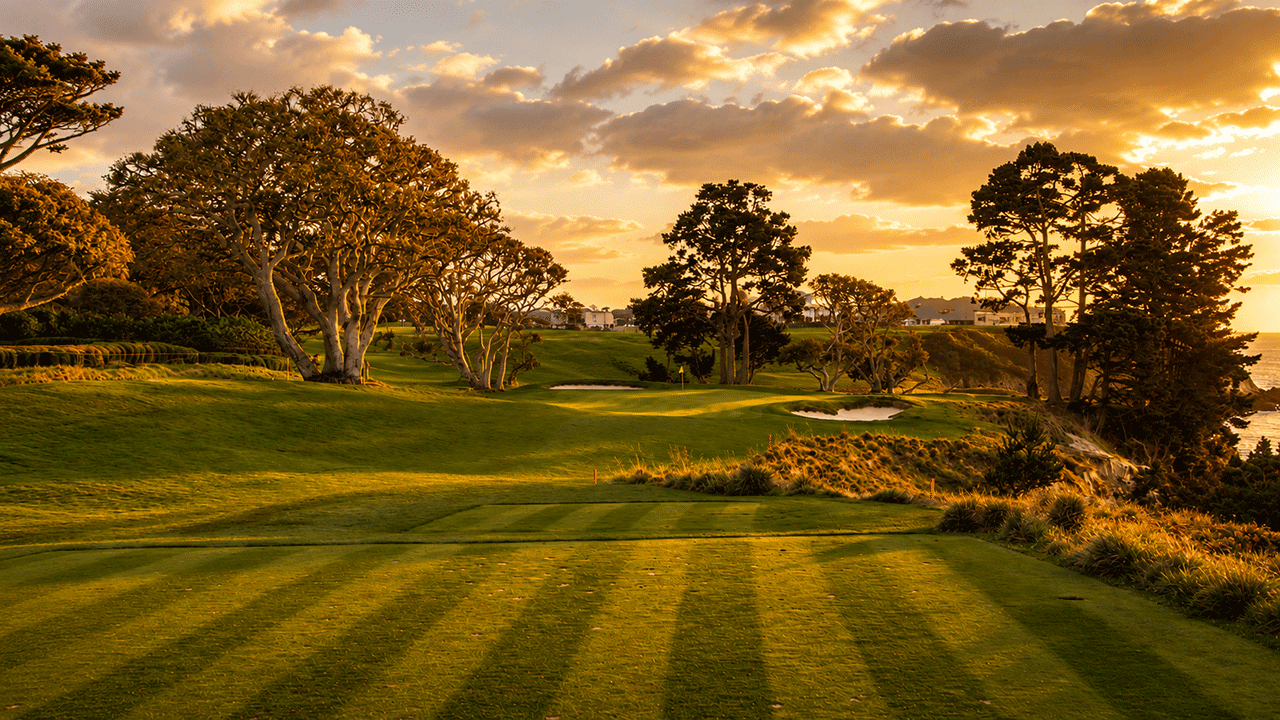
Every great golf course evolves.
Even Pebble Beach Golf Links—a course that has hosted seven U.S. Opens, inspired generations of golfers, and consistently ranks among the world's greatest golf courses—has undergone thoughtful changes throughout its storied history.
None was more significant than the transformation of the 5th hole.
For nearly 80 years, the original par 3 played inland, disconnected from the dramatic coastline that makes Pebble Beach so unforgettable. While it was a perfectly respectable golf hole, many golfers, caddies, and course architects felt it lacked the character and spectacle found throughout the rest of the course.
Today, the 5th is one of Pebble Beach's signature holes.
Perched high above Stillwater Cove, it features a dramatic tee shot over a rugged gulley to a beautifully contoured green with panoramic views of the Pacific Ocean. Its transformation wasn't simply the result of a redesign—it was the culmination of a vision that had been delayed for more than eight decades.
The story behind the "New Fifth" is one of Jack Nicklaus, Samuel F.B. Morse's greatest regret, an extraordinary land acquisition, and one of the most fascinating architectural projects in golf history.
Samuel F.B. Morse's Lifelong Regret
Ironically, the story begins before Pebble Beach Golf Links was ever built.
In 1915, Pebble Beach founder Samuel F.B. Morse sold approximately five acres of spectacular oceanfront property overlooking Stillwater Cove. At the time, there were no finalized plans for a golf course along this stretch of coastline, so selling the parcel seemed insignificant.
It wasn't.
Shortly afterward, architects Jack Neville and Douglas Grant finalized the routing of Pebble Beach Golf Links. When they reached what would become the 5th hole, they discovered the most spectacular piece of land on the property was no longer available.
Unable to reclaim the parcel, they were forced to route the golf course inland, resulting in an ordinary uphill par 3 that many golfers considered the weakest hole on the course.
Morse reportedly admitted throughout his life that selling that property was one of his greatest regrets.
For nearly 80 years, Pebble Beach was missing a crucial piece of its masterpiece.
Finally Completing the Vision
Everything changed in the late 1990s.
Pebble Beach Company, then owned by Taiheiyo Club, successfully reacquired the coveted oceanfront property with the assistance of Sumitomo Bank.
The acquisition wasn't simply a purchase. The property was creatively subdivided so residential lots could remain while the dramatic oceanfront section was returned to the golf course.
For the first time since 1919, Pebble Beach finally possessed the land Morse had always wished he'd never sold.
Now came the obvious question.
Who should design the new hole?
The answer was Jack Nicklaus.
Already synonymous with Pebble Beach through his unforgettable 1-iron on the 17th hole to win the 1972 U.S. Open, Nicklaus was entrusted with creating a hole worthy of one of the world's greatest golf courses.
Jack Nicklaus Creates a Pebble Beach Classic
Nicklaus wasn't asked to redesign Pebble Beach.
He was asked to redesign one hole.
The result opened in 1998 and immediately transformed the opening stretch of the golf course.
Standing on the championship tee, golfers now face one of Pebble Beach's most intimidating opening visuals.
Instead of a straightforward inland shot, players must carry a rugged natural gulley before the ball begins its flight toward a green perched dramatically above Stillwater Cove.
The hole isn't particularly long.
It simply looks intimidating.
That's classic Jack Nicklaus architecture.
He understood that memorable golf holes are created through angles, elevation, visual deception, and psychology—not simply yardage.
A Green Unlike Any Other at Pebble Beach
One of the most fascinating aspects of the new 5th is something many golfers never notice.
Nearly every golfer has heard the golden rule:
"Stay below the hole."
That advice usually serves you well at Pebble Beach because most greens feature a subtle back-to-front pitch, helping players hold approach shots while rewarding conservative play.
The 5th breaks that rule.
Nicklaus intentionally designed one of the few greens on the course that doesn't simply slope from back to front.
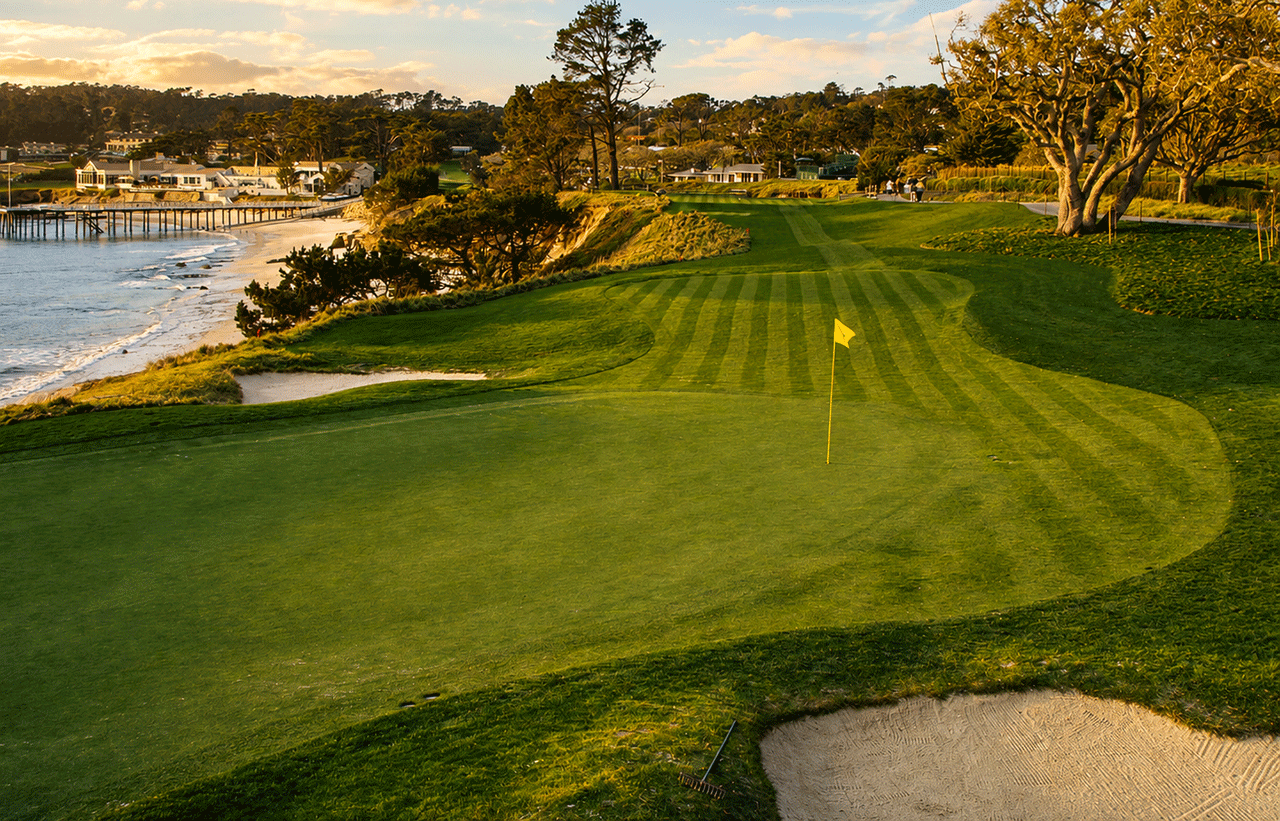
Instead, the putting surface features multiple interior contours, distinct quadrants, and pin positions that completely change how the hole should be played from one day to the next.
From a caddie's perspective, simply hitting the green isn't enough.
Finding the correct section of the putting surface is often the difference between a realistic birdie opportunity and a difficult two-putt for par.
It's one of Pebble Beach's most subtle examples of strategic architecture.
Walk Back to the Championship Tee
If you're fortunate enough to play Pebble Beach, do yourself a favor.
Even if you're playing from the regular tees, walk back to the championship tee before hitting your shot.
You'll immediately understand what Nicklaus was trying to accomplish.
From there, golfers launch their tee shot over a dramatic natural ravine before the ball climbs toward the green overlooking Stillwater Cove.
The carry isn't excessively long.
It simply feels enormous.
That's the genius of the design.
Don't Miss the Bronze Plaque
One of the easiest details to overlook is also one of the most meaningful.
As you arrive at the 5th tee, look down.
Embedded in the rock is a bronze plaque commemorating Pebble Beach's "New Fifth Hole."
Far more than a simple dedication, it tells the remarkable story behind the hole you're about to play.
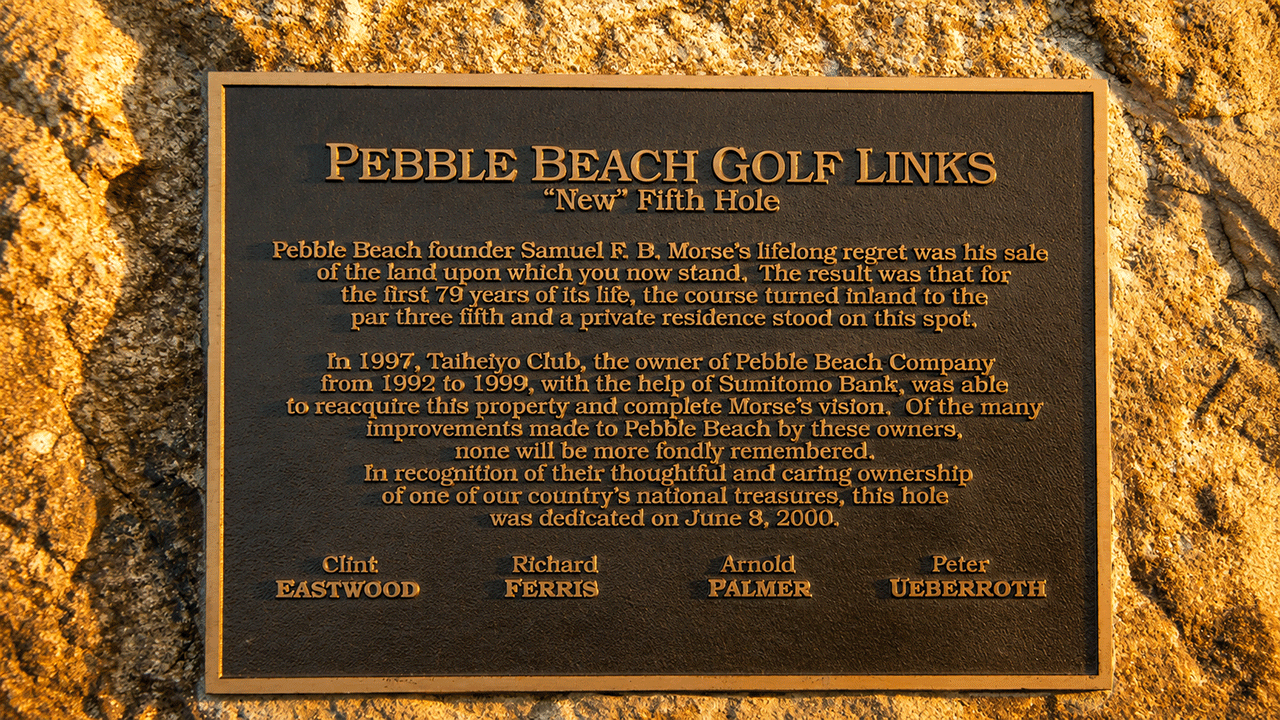
The plaque begins by acknowledging Samuel F.B. Morse's lifelong regret—selling the very parcel of land upon which golfers now stand. Because that property was unavailable when Pebble Beach Golf Links opened in 1919, the course was forced inland while a private residence occupied this spectacular stretch of coastline.
The plaque then celebrates the property's return.
In 1997, Taiheiyo Club, owners of Pebble Beach Company from 1992 through 1999, successfully reacquired the land with the assistance of Sumitomo Bank, finally allowing Morse's original vision to become reality.
The new 5th hole was formally dedicated on June 8, 2000.
Inscribed at the bottom are four names forever connected to Pebble Beach's stewardship:
- Clint Eastwood
- Richard Ferris
- Arnold Palmer
- Peter Ueberroth
Interestingly, while Jack Nicklaus designed the hole, the plaque isn't really about honoring the architect.
It's about honoring the realization of a vision that had been delayed for more than 80 years.
Take a moment to read it before you tee off.
It provides a wonderful appreciation for the history beneath your feet.
The Staircase That Leads to Nowhere
As spectacular as the new 5th hole is, there's another feature that leaves many golfers scratching their heads.
Look down toward Stillwater Cove.
You'll notice a staircase climbing from the beach toward the golf course.
It seems to lead...nowhere.
Or perhaps more accurately, it appears to lead directly onto one of the busiest golf holes in America.
The most widely accepted explanation involves the California Coastal Commission.
When Pebble Beach Company redeveloped the property, preserving public access to California's coastline was an important part of the permitting process. The staircase appears to have been constructed to satisfy those coastal access requirements, allowing the public a route between the shoreline and the bluff.
Whether the exact staircase was specifically required by the Coastal Commission is difficult to verify through public records, so it's best viewed as informed local history rather than established fact.
Regardless, it's one of Pebble Beach's most curious landmarks.
Practically speaking, very few people ever use it.
If someone did climb those stairs from the beach, they'd emerge beside an active championship golf hole surrounded by golfers, caddies, and marshals.
It's one of those wonderfully quirky details that most visitors notice—but few ever ask about.
One Hole Changed Pebble Beach Forever
What's remarkable about Pebble Beach's 5th isn't simply that Jack Nicklaus designed it.
It's that he finally allowed Pebble Beach to become the golf course its founders had envisioned more than a century earlier.
One regrettable land sale delayed that dream for nearly 80 years.
Today, few golfers would ever believe the 5th was once considered Pebble Beach's weakest hole.
Instead, it's become one of the course's defining moments—a breathtaking par 3 that seamlessly blends history, architecture, strategy, and spectacular scenery.
The next time you stand on the 5th tee, pause for a moment.
Read the plaque.
Walk back to the championship tee.
Look out across Stillwater Cove.
Then remember...
You're standing on the piece of Pebble Beach that almost never became Pebble Beach.
CaddyTips Playing Guides
Planning your own round at Pebble Beach?
Before you tee it up, download the CaddyTips Pebble Beach Playing Guide. Built from the insights of experienced local caddies, our guide includes hole-by-hole strategy, ideal targets, green-reading advice, course management tips, and insider knowledge to help you play Pebble Beach like you've seen it a hundred times.
CaddyTips has a network of experienced caddies on the Monterey Peninsula that have provided us with valuable insight for the top golf courses like Spyglass Hill Golf Course , Del Monte Golf Course, Poppy Hills Golf Course and more.