
How To Properly and Effectively Gauge the Wind in Golf
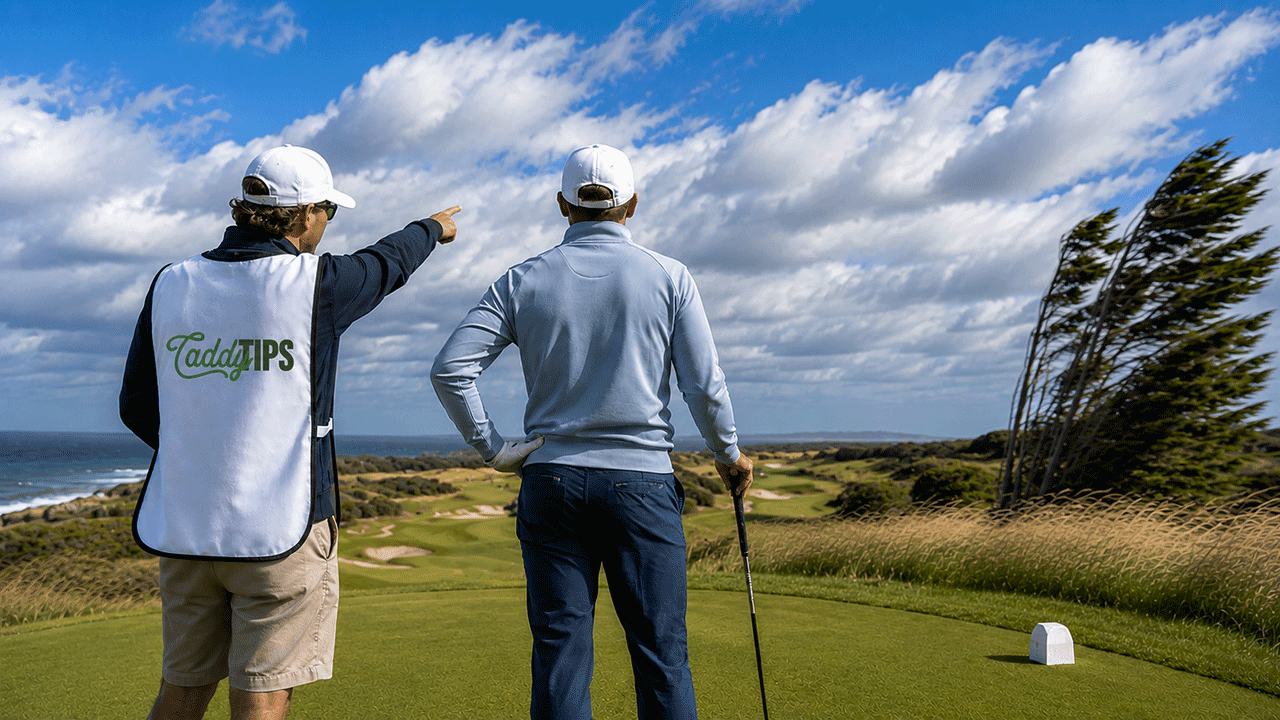
Every golfer knows the feeling.
You hit what feels like a perfect 7-iron… only to watch it come up 20 yards short or sail over the green.
The culprit is often the wind.
Learning to judge the wind is one of the quickest ways to improve your course management. Fortunately, you don't need to be a meteorologist—you just need a consistent routine.
1. Start Above the Trees
This is one of the biggest mistakes amateurs make.
Most golfers judge the wind where they're standing.
Your golf ball spends almost none of its flight there.
Instead:
- Look at the tops of nearby trees.
- Watch the clouds.
- Observe the highest flag you can see.
Wind speed and direction are often very different 50–100 feet above the ground, where your golf ball actually travels.
2. Don't Trust One Indicator
Use several clues before every shot.
✔ Tree tops
✔ Flags
✔ Clouds
✔ Feel the wind on your face
✔ Toss a little grass into the air
When all five agree, you can commit with confidence.
3. Headwinds Hurt More Than Tailwinds Help
This surprises many golfers.
TrackMan data shows that a headwind generally reduces carry more than an equivalent tailwind increases it. A 20 mph headwind can cost nearly twice as much carry as a 20 mph tailwind adds.
CaddyTip: Don't simply "subtract one club" downwind and "add one club" into the wind. Those adjustments are rarely symmetrical.
4. Club Up—Don't Swing Harder
One of the most common mistakes is trying to overpower the wind.
PGA Professionals recommend:
- Take more club.
- Grip down slightly.
- Make a shorter, more controlled swing.
- Keep the ball flight lower.
A lower trajectory spends less time in the wind and is generally easier to control.
5. Know How Different Winds Affect the Ball
Headwind
- Ball flies higher.
- Loses carry.
- Stops faster.
Tailwind
- Ball flies flatter.
- Carries farther.
- Releases more after landing.
Crosswind
- Focus more on starting direction than distance.
- If you shape the ball, it's often more predictable to curve it into the wind rather than letting both your shot shape and the wind move the ball the same direction.
6. Have a Simple Rule of Thumb
For recreational golfers, complicated math usually slows play.
A practical starting point:
- 5 mph: Minor adjustment.
- 10 mph: Usually one extra club into the wind.
- 15–20 mph: Often two or more clubs into the wind. A good indicator and a tip caddies use all the time - if your golf polo or pant leg is noticeably moving from the wind, you can be sure the wind is at least 15-20 mph and will drastically effect your ball flight.
- Tailwind: Make a smaller adjustment than you would for the same headwind.
As you gain experience, you'll refine these adjustments based on your own ball flight.
Final Thought
The best players don't guess—they observe.
Before every shot:
- Look high.
- Check multiple indicators.
- Choose the right club.
- Make a smooth swing.
The wind isn't something to fight.
It's simply another part of the golf course that a smart player learns to use.
CaddyTips® Wisdom
Amateurs play against the wind. Great players learn to play with it.
And remember the old adage that still is the best advice for playing in windy condition
"When it's breezy...swing easy!"