
The Importance of Picking a Target Off The Tee
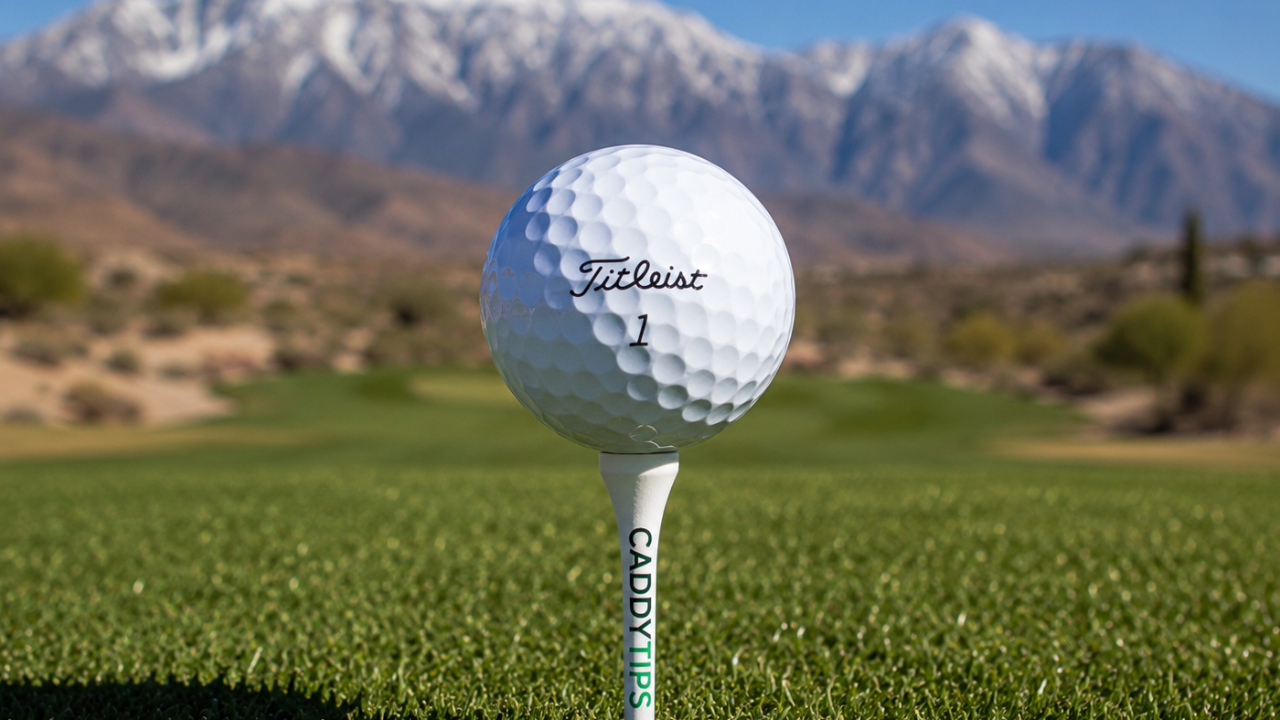
Successfully getting off the tee box sets you up for success on every hole.
Now, that doesn’t necessarily mean striping it down the middle on every hole or stuffing every approach shot close to the flag. What it does mean is selecting very specific targets that allow for a reasonable miss without creating unnecessary trouble.
One of the biggest mistakes amateur golfers make is aiming at “the fairway.”
The fairway is not a target.
The fairway is an area.
The best golfers and caddies in the world pick a precise target within that area.
They might be aiming at:
- A distant tree
- The corner of a bunker
- A television tower
- A clubhouse chimney
- A mountain peak
- A fairway stripe
- A patch of discoloration in the turf
The smaller and more specific the target, the more committed the swing tends to become.
Every Hole Has A Preferred Miss
One of the first things a good caddy identifies is where a golfer can safely miss.
Many golfers stand on the tee and immediately focus on the trouble.
“Don’t hit it in the bunker.”
“Don’t hit it left.”
“Don’t hit it in the water.”
The problem is your brain often focuses on exactly what you’re trying to avoid.
Instead, great golfers think differently.
They ask:
Where is the best place to miss?
Let’s say a hole has:
- Water left
- Fairway bunker right
- Green sloping from back to front
The ideal target might not be the center of the fairway.
It might actually be the right-center portion of the fairway because even if the shot leaks slightly right, you’re still in play.
A small miss right beats a disaster left every time.
The Goal Is Not Perfection
Golfers often believe the objective is to hit the perfect shot.
That’s rarely the case.
The objective is to position yourself so that even imperfect shots produce acceptable outcomes.
Professional caddies spend countless hours helping players identify the largest landing area with the smallest penalty for a miss.
That’s strategic golf.
That’s course management.
And that’s how scores drop.
Think In Circles, Not Lines
Most golfers imagine a perfectly straight shot.
Unfortunately, golf balls don’t cooperate.
Every golfer has a shot pattern.
Some curve it left.
Some curve it right.
Some miss short.
Some miss long.
Instead of planning for the perfect shot, plan for your shot pattern.
Imagine a circle around your intended landing area.
Now ask yourself:
“If my ball finishes anywhere inside this circle, am I okay?”
If the answer is no, your target probably needs adjustment.
Distance Matters Just As Much As Direction
Target selection isn’t only about left and right.
It’s also about distance.
Many golfers automatically pull driver because it’s the longest club in the bag.
Sometimes that’s the correct decision.
Sometimes it’s not.
A good target includes:
- Direction
- Distance
- Preferred angle into the green
For example, being 145 yards from the fairway may be far superior to being 95 yards from deep rough.
Closer isn’t always better.
Play Away From Trouble
One of the most common mistakes amateurs make is challenging hazards that don’t need to be challenged.
A bunker sitting 260 yards away may look harmless.
Until you hit your best drive of the day.
A water hazard hugging the left side may only come into play once every few rounds.
Unfortunately, that’s often enough to ruin a scorecard.
Good golfers don’t flirt with trouble.
Good golfers create margin.
The more margin you create, the fewer penalty strokes you’ll make.
Use The Entire Hole
Many golfers unknowingly make holes play narrower than they really are.
A 40-yard-wide fairway may effectively become 15 yards wide because they’re aiming at the wrong place.
Take a step back.
Study the entire hole.
Where is the widest part of the landing area?
Where does the fairway naturally funnel?
Where can you miss and still advance the ball?
These are the questions experienced caddies ask before every tee shot.
Pick Your Target Before Your Pre-Shot Routine
One of the most overlooked aspects of target selection is when you pick your target.
Many golfers begin their pre-shot routine without ever fully committing to a target. They step into the ball still debating club selection, worrying about hazards, or thinking about swing mechanics.
That’s backwards.
The target should be selected before the pre-shot routine ever begins.
Once the target is chosen, the only remaining job is to execute the shot.
Over the years, two popular schools of thought have emerged when it comes to target selection.
The Intermediate Target Method
One of the most widely taught alignment techniques involves selecting a target just a few feet in front of the golf ball.
Some instructors recommend a blade of grass, a discolored patch of turf, or a small leaf located one to three feet ahead of the ball on the target line.
Phil Mickelson has frequently discussed this concept when explaining alignment.
The beauty of the intermediate target is simplicity.
Instead of trying to align yourself to a fairway bunker 280 yards away, you’re simply aligning the clubface and your body to a very small target directly in front of you.
Many golfers find this dramatically improves alignment and setup consistency.
The Distant Target Method
Many tour players prefer focusing on a target far in the distance.
That target might be:
- A tree behind the fairway
- A mountain peak
- A clubhouse chimney
- A television tower
- A cloud formation
- A distant bunker edge
The advantage of a distant target is visualization.
Rather than staring down at the golf ball and allowing swing thoughts to creep into your mind, your eyes stay up and your focus remains on the intended shot.
Great golfers tend to think in pictures.
They visualize trajectories.
They visualize ball flights.
They visualize landing areas.
Focusing on a distant target helps create that picture.
Why Looking Up Matters
One of the biggest mistakes amateurs make is spending too much time staring at the golf ball.
The longer golfers stare at the ball, the more likely they are to begin thinking about mechanics.
Suddenly the mind becomes cluttered with thoughts like:
- Keep your head down
- Don’t come over the top
- Slow down the transition
- Don’t hit it right
- Don’t hit it left
The focus shifts from the target to the swing.
Golf is a target game.
The body performs best when the mind is focused on where the ball is going, not on how the club is moving.
The Best Approach? Use Both
Many experienced golfers and caddies use a combination of both methods.
First, identify a precise target in the distance.
Create the shot picture.
Visualize the trajectory.
Commit to the landing area.
Then locate a small intermediate target a few feet in front of the golf ball that sits directly on that line.
Now you have the best of both worlds.
The distant target provides visualization.
The intermediate target provides alignment.
Together they create confidence, commitment, and clarity.
That’s a powerful combination before every tee shot.
Wind Changes Everything
A target that works on a calm day may become a terrible target in a crosswind.
One of the biggest advantages of playing with a local caddy is understanding how wind affects each hole.
Some holes play directly into the prevailing wind.
Others sit in protected valleys.
Others experience swirling gusts that aren’t obvious from the tee.
Always adjust your target based on:
- Wind direction
- Wind strength
- Turf firmness
- Elevation changes
A target is never static.
Conditions matter.
Commit To The Target
Perhaps the most important step of all.
Once you’ve selected the correct target, commit.
Indecision creates poor swings.
A committed swing toward a smart target almost always outperforms a hesitant swing toward a perfect target.
Pick your target.
Trust it.
Make your swing.
Accept the result.
Repeat.
Why Caddies Excel At Target Selection
One of the greatest benefits of hiring a local caddy is target selection.
Experienced caddies know:
- Where the fairway actually plays widest
- Which bunkers matter
- Which bunkers don’t
- Where the ideal angle into the green exists
- Where golfers consistently make mistakes
- Where the safest misses are located
At CaddyTips, we spend countless hours helping golfers understand these same concepts through our course guides.
But nothing replaces local knowledge from a caddy who has watched thousands of shots from the same tee box.
The best caddies aren’t simply helping golfers find fairways.
They’re helping golfers find the smartest target.
Final Thoughts
Most golfers focus on the swing.
Great golfers focus on the target.
The next time you stand on a tee box, don’t simply aim at the fairway.
Identify the safest miss.
Study the hole.
Understand your shot pattern.
Create margin.
Visualize the shot.
Pick a precise target.
And then commit to it.
Because golf isn’t always about hitting perfect shots.
More often, it’s about making smart decisions before the club ever moves.
And it all starts with picking the right target.
At CaddyTips, we believe every golfer should play every course like they’ve seen it before. Understanding where to aim, where to miss, and how to commit to a target is one of the fastest ways to lower scores and avoid big numbers. For more strategic golf advice, course-management tips, and professional caddy insights, explore the growing library of complimentary resources available from CaddyTips.