
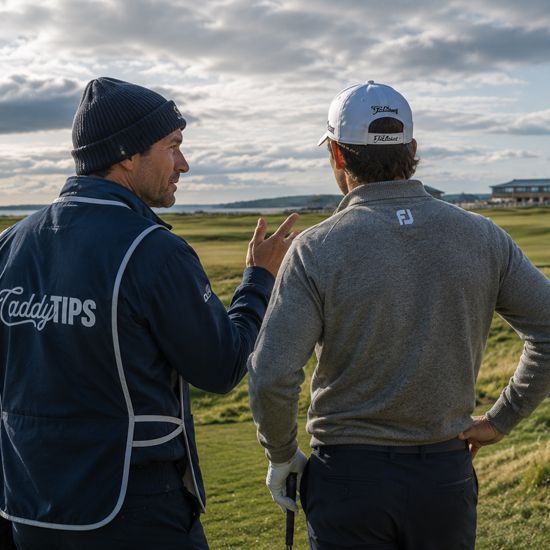
LINKS GOLF COURSE TIPS: PLAY BETTER IN TRUE LINKS CONDITIONS
Master the art of playing links golf
Links golf has challenged golfers for centuries because it rewards a different kind of skill. The game becomes less about perfect swings and more about imagination, adaptability, and understanding how the course wants to be played. Firm turf, natural contours, pot bunkers, and relentless winds create situations where the smartest shot is often not the most obvious one.
Built from decades of professional caddy experience, this complimentary guide helps golfers embrace the unique challenges of links golf. Learn how to think your way around the course, control trajectory, use the ground to your advantage, and make the strategic decisions that separate memorable rounds from frustrating ones.
Get Your Free Links Course Tips✅ Complimentary resource from CaddyTips®
✅ Instant PDF download
✅ Links Golf Strategy Guide
✅ Wind Management Techniques
✅ Ground Game Playbook
✅ Pot Bunker Recovery Strategies
✅ Firm Turf Adjustments
✅ Links Green Reading Tips
✅ Links Course Preparation Checklist
✅ Bump and run technique explanation

Built By Experienced Professional Caddies
Decades of caddying on some of the world's most challenging links courses have been distilled into practical links-golf strategies that help golfers understand wind, firm turf, pot bunkers, and ground-game decision-making.
What Links Golf Demands
A close look at patterns across wind conditions, shot trajectories, course architecture, turf firmness, and scoring trends to uncover the strategies that consistently produce lower scores on links golf courses.
Here is a snippet from the Golf Travel Guide: Links Golf Course Tips
Outward & Inward
Why links courses run nine out and nine back
The first signature of a true links course is its routing: the front nine heads OUT in one direction, ending far from the clubhouse, and the back nine works its way IN to the starting point. This is where the expression "he went out in 42 and in with 45" originated. This isn't a quirk - it's a deliberate design that uses the prevailing wind as a hazard for half the round.
A famous example is the Old Course at St Andrews: holes 1-7 run out toward the Eden Estuary, then holes 8-12 turn at the loop and 13-18 head back towards the R&A Clubhouse. The wind that helps you out hurts you on the way back. What this means for your round: expect long stretches of holes that play one way (into the wind or downwind), not a hole-by-hole variety. Calibrate early - by hole 3, you'll know how the wind is going to play that day.
CaddyTips®: Check the wind on the 1st tee by looking for flags by the clubhouse and assume that direction holds for the front nine. The back nine will likely flip direction to follow the routing of the golf course.
Build Your CaddyTips® Library
Every CaddyTips® guide you purchase is added to your personal library for easy access anytime. View your collection through any web browser or the free CaddyTips® app for Apple and Google devices.
Get Your Links Golf Tips Guide
Explore More CaddyTips®

Golf Travel Guide: Coastal Golf Course Tips
Master the unique challenges of oceanfront golf with this CaddyTips® coastal course guide. Learn how wind, humidity, soft fairways, temperature, and sea-level conditions affect carry distance, rollout, and shot strategy on some of the world’s most scenic and demanding golf courses.
Free

CaddyTips® Golf Travel Facts
Improve your golf IQ with this CaddyTips® guide to the hidden factors that affect ball flight and scoring. Learn how elevation, temperature, humidity, grass types, grain, and bunker sand influence distance, spin, rollout, and shot strategy on courses around the world.
Free

Golf Course Management: How to Avoid Big Numbers
Lower your scores with this CaddyTips® course-management playbook built to eliminate big numbers. Learn smart strategies for bailout areas, sucker pins, short-siding, forced carries, elevation changes, and the powerful “80% Rule” used by great players to make smarter decisions on the course.