

PLAY BETTER GOLF ANYWHERE YOU TRAVEL
Every golf course plays differently. Elevation, weather, grass type, grain, temperature, and bunker conditions can dramatically affect how far your ball travels, how it reacts when it lands, and even how your putts roll. Yet most golfers never learn how to account for these hidden variables.
Built from professional caddy experience, this complimentary Golf Travel Guide reveals the course conditions that influence every shot. Whether you're playing a bucket-list destination, a coastal resort, a desert layout, or your local club, you'll learn how to make smarter decisions, avoid costly mistakes, and play every course with greater confidence.
Get Your Free Golf Travel Guide✅ Complimentary resource from CaddyTips®
✅ Instant PDF download
✅ How to gauge elevation changes for your distances
✅ Why uphill/downhill shots require different landing areas
✅ How grain influences speed and break on the greens
✅ Understanding grass types & how they impact your game
✅ How temperature impacts carry distance and rollout
✅ The truth about humidity, rain, and wind
✅ How different bunker sands change shot selection
✅ Real-world data used by experienced caddies and competitive golfers

Built By Experienced Professional Caddies
Decades of caddying at top golf courses around the world have been distilled into practical insights that help golfers better understand how elevation, weather, grass varieties, grain, rough, and course conditions influence every shot.
How Conditions Affect Your Ball
A close look at patterns across elevation, weather, turf conditions, grain, and bunker characteristics to help golfers understand how course conditions influence scoring opportunities.
Here is a snippet from the Golf Travel Facts and Conditions Guide - Play Better on the Road CaddyTips®
Greens & Grain
Why your putts break before you read them
Aside from slope, greens have a hidden directional pull called GRAIN - the direction the grass blades are growing. Grain affects both speed and break. Grass typically grows toward bodies of water (oceans, lakes, rivers) and away from mountains. It can also follow the sun's path through the day.
The grain effect depends heavily on grass type. Bermuda, common in the South and warm-weather courses, has the strongest grain - a down grain putt can be twice as fast as the same putt into the grain. Poa, Bent, and Rye grasses also have grain, but the effect is much subtler.
CaddyTips®: Look at the cup. The smooth side is down grain (the side the grass is growing toward) and will be faster. The rough, jagged side is into the grain, and those putts will be slower. That's the truest read on which way the blades are leaning. On Bermuda greens, always check the grain before you read break. Slope and grain together - never just slope. And if you are not too sure which type of grass variety the greens are, ask the pro shop before you tee off.
Build Your CaddyTips® Library
Every CaddyTips® guide you purchase is added to your personal library for easy access anytime. View your collection through any web browser or the free CaddyTips® app for Apple and Google devices.
Get Your Golf Travel Tips Guide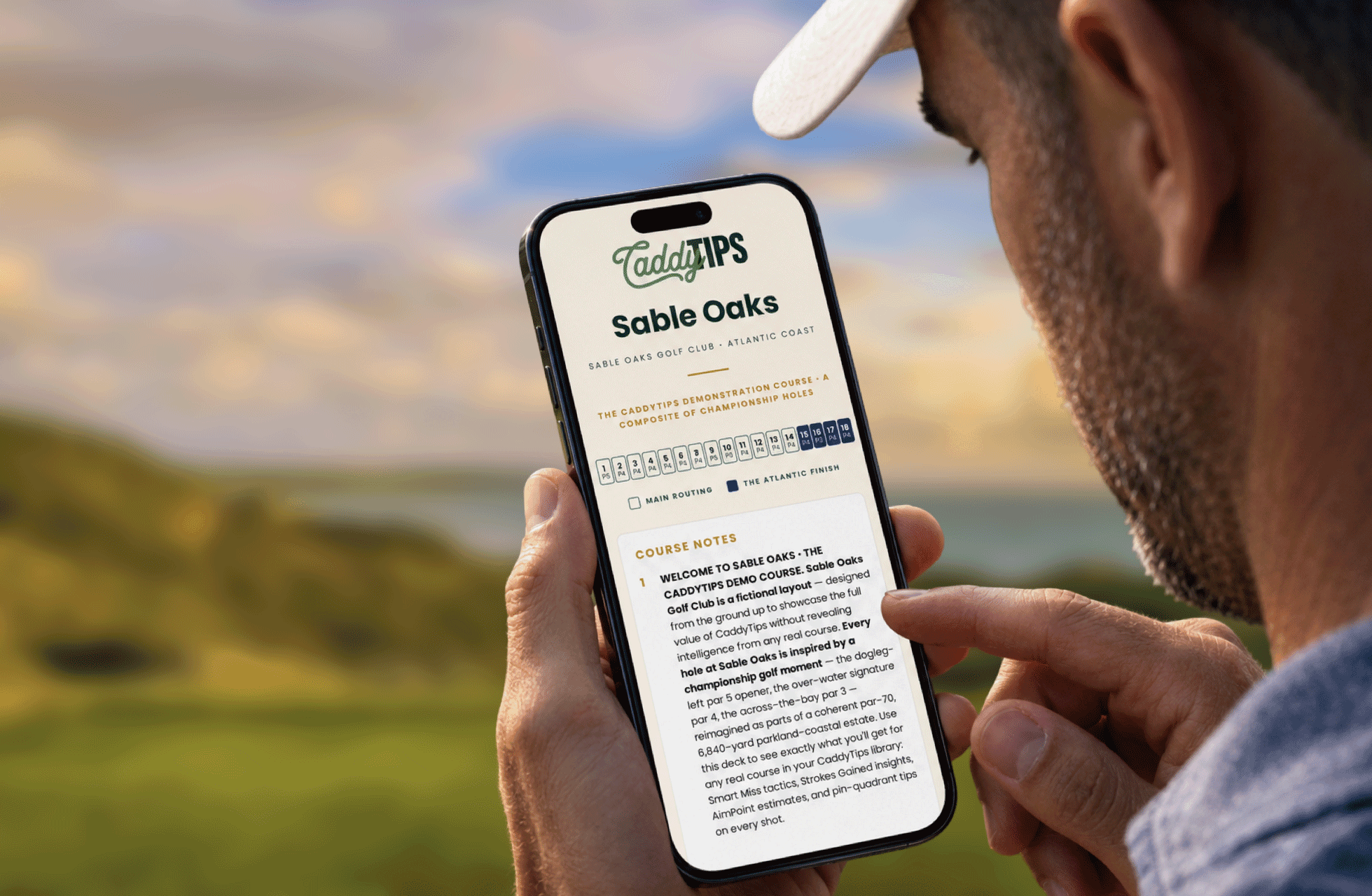
Explore More CaddyTips®

The Art of Bunker Design and Scoring
Dive into the strategy and architecture behind golf’s most important hazards with this in-depth CaddyTips® guide to bunker design. Learn bunker types, sand characteristics, placement strategies, and how architects use bunkering to shape risk, reward, and shot-making on great golf courses worldwide.
Free

Golf Course Management: How to Avoid Big Numbers
Lower your scores with this CaddyTips® course-management playbook built to eliminate big numbers. Learn smart strategies for bailout areas, sucker pins, short-siding, forced carries, elevation changes, and the powerful “80% Rule” used by great players to make smarter decisions on the course.
Free

How To Read Greens - Free Putting Tips
Improve your putting with this detailed CaddyTips® guide to reading greens. Learn how to judge slope, grain, speed, undulation, and double-breaking putts using proven techniques and insights from top players and experienced caddies.