
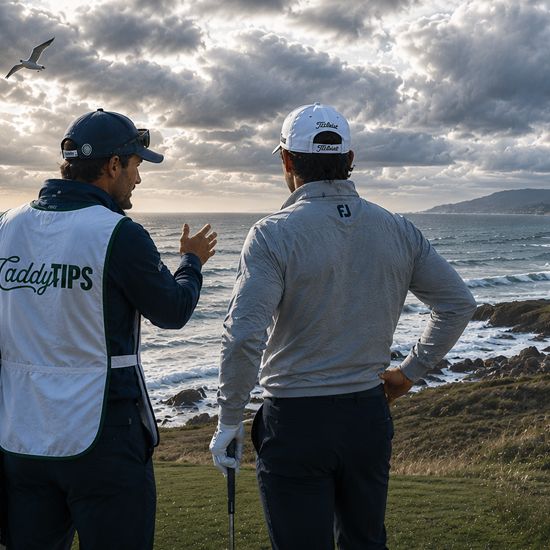
GOLF TRAVEL GUIDE: COASTAL GOLF COURSE TIPS
PLAY BETTER GOLF ON THE COAST
Most golfers arrive at coastal golf courses expecting breathtaking views and unforgettable memories. What they don't expect is how dramatically ocean air, wind, marine layers, soft fairways, and coastal greens can affect their game. The same swing that works at home can produce entirely different results by the sea.
Built from decades of professional caddy experience at golf courses like Pebble Beach and Bandon Dunes, this complimentary guide reveals the hidden factors that influence scoring on coastal golf courses. Learn how to adjust your strategy, select better clubs, and make smarter decisions before your next seaside round.
Get Your Free Coastal Course Tips✅ Complimentary resource from CaddyTips®
✅ Instant PDF download
✅ Why coastal air reduces carry distance
✅ How marine layers affect ball flight and rollout
✅ Coastal wind strategies used by experienced golfers
✅ How to read greens near the ocean
✅ Why coastal bunkers require different technique
✅ How soft fairways change course management
✅ Smart scoring strategies for seaside golf
✅ Practical tips for courses like Pebble Beach, Spyglass Hill, Bandon Dunes and beyond

Built By Experienced Professional Caddies
Decades of caddying at world-class coastal golf courses have been distilled into practical strategies that help golfers understand how ocean air, wind, marine layers, soft turf, and coastal greens influence every shot.
The Hidden Factors
A close look at patterns across weather, wind, turf conditions, green complexes, and scoring trends to uncover the hidden factors that affect performance on coastal golf courses.
Here is a snippet from the Golf Travel Guide: Coastal Golf Course Tips CaddyTips®
Wind & Trajectory
The biggest factor in every coastal round
Coastal wind isn't like inland wind. It swirls, gusts, and changes direction along the way to the green. Your ability to control trajectory will decide your score more than your ball-striking will. The two shots that win on the coast: a controlled LOW shot into the wind, and a controlled HIGH shot downwind. Into the wind, a knockdown punch with more club lands softer and resists getting ballooned. Downwind, a higher trajectory uses the wind to carry the ball farther while still letting it stop on the green. Ball position is key to helping control the trajectory - before your round, practice placing the ball back in your stance for a low shot and slightly up in your stance for a high shot.
Two rules that save strokes. First, when in doubt, check the flag AND the treetops - they often disagree, and the trees usually win. Second, always lean towards taking an extra club into the wind. The biggest amateur mistake is muscling a normal club selection into a stiff breeze. And remember the old adage: if it's breezy, swing easy. Overswinging and swinging too quickly typically leads to gripping the club too tightly and producing too much backspin, which is not ideal in the wind.
CaddyTips®: When the wind is up, play to the fat of every green. Pin-hunting in the wind is how big numbers can happen easily.
Build Your CaddyTips® Library
Every CaddyTips® guide you purchase is added to your personal library for easy access anytime. View your collection through any web browser or the free CaddyTips® app for Apple and Google devices.
Get Your Costal Golf Tips Guide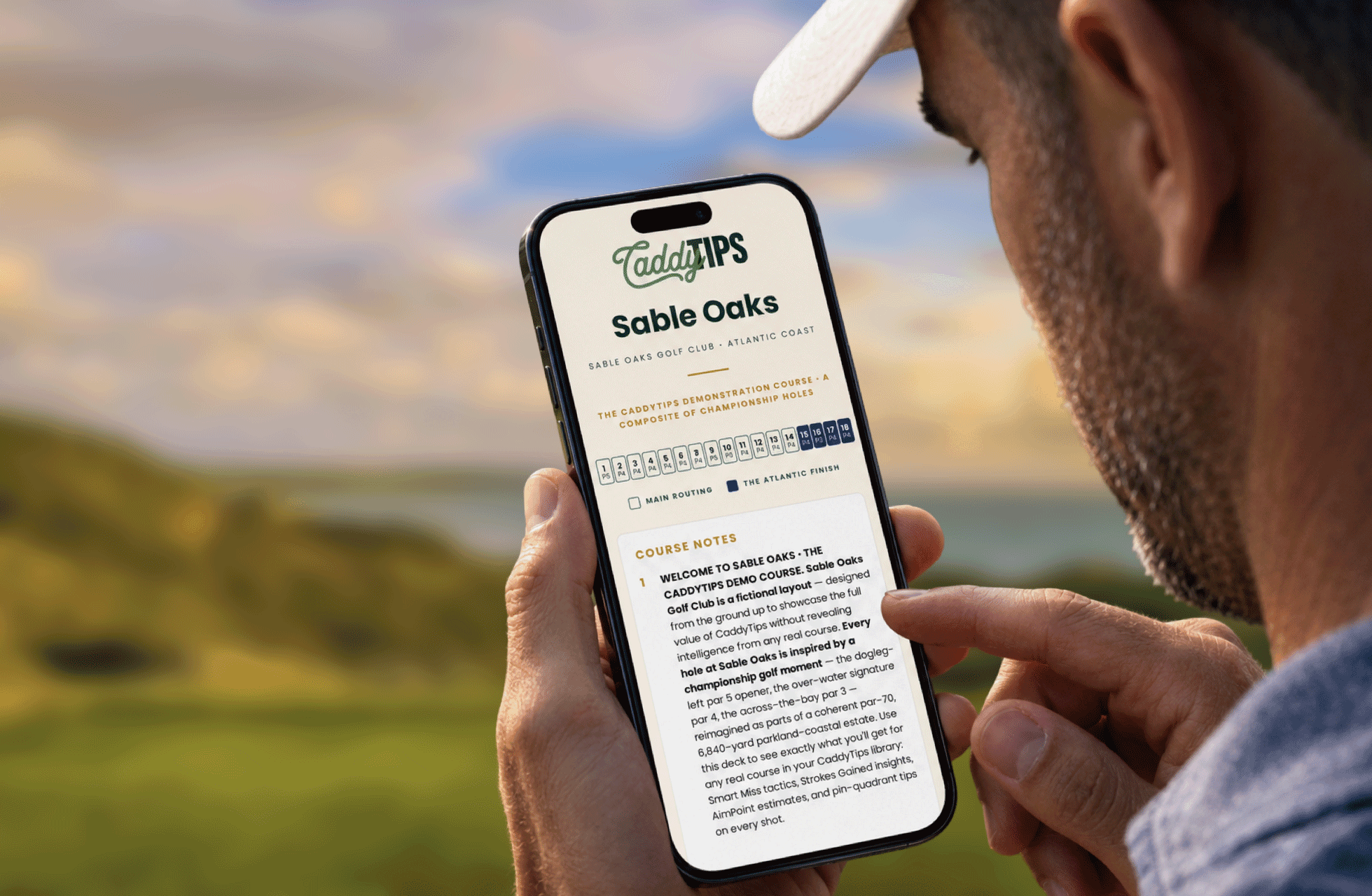
Explore More CaddyTips®

The Art of Bunker Design and Scoring
Dive into the strategy and architecture behind golf’s most important hazards with this in-depth CaddyTips® guide to bunker design. Learn bunker types, sand characteristics, placement strategies, and how architects use bunkering to shape risk, reward, and shot-making on great golf courses worldwide.
Free

Golf Course Management: How to Avoid Big Numbers
Lower your scores with this CaddyTips® course-management playbook built to eliminate big numbers. Learn smart strategies for bailout areas, sucker pins, short-siding, forced carries, elevation changes, and the powerful “80% Rule” used by great players to make smarter decisions on the course.
Free

How To Read Greens - Free Putting Tips
Improve your putting with this detailed CaddyTips® guide to reading greens. Learn how to judge slope, grain, speed, undulation, and double-breaking putts using proven techniques and insights from top players and experienced caddies.